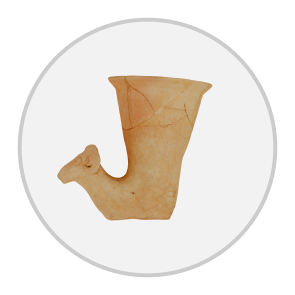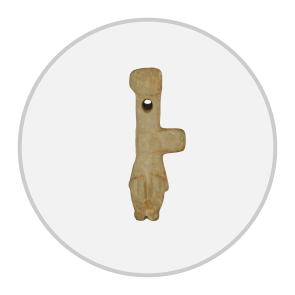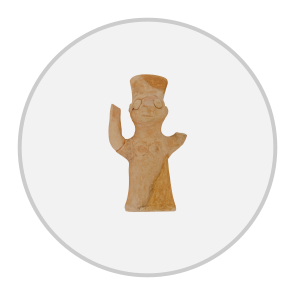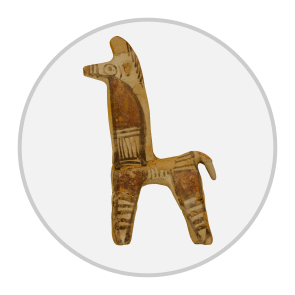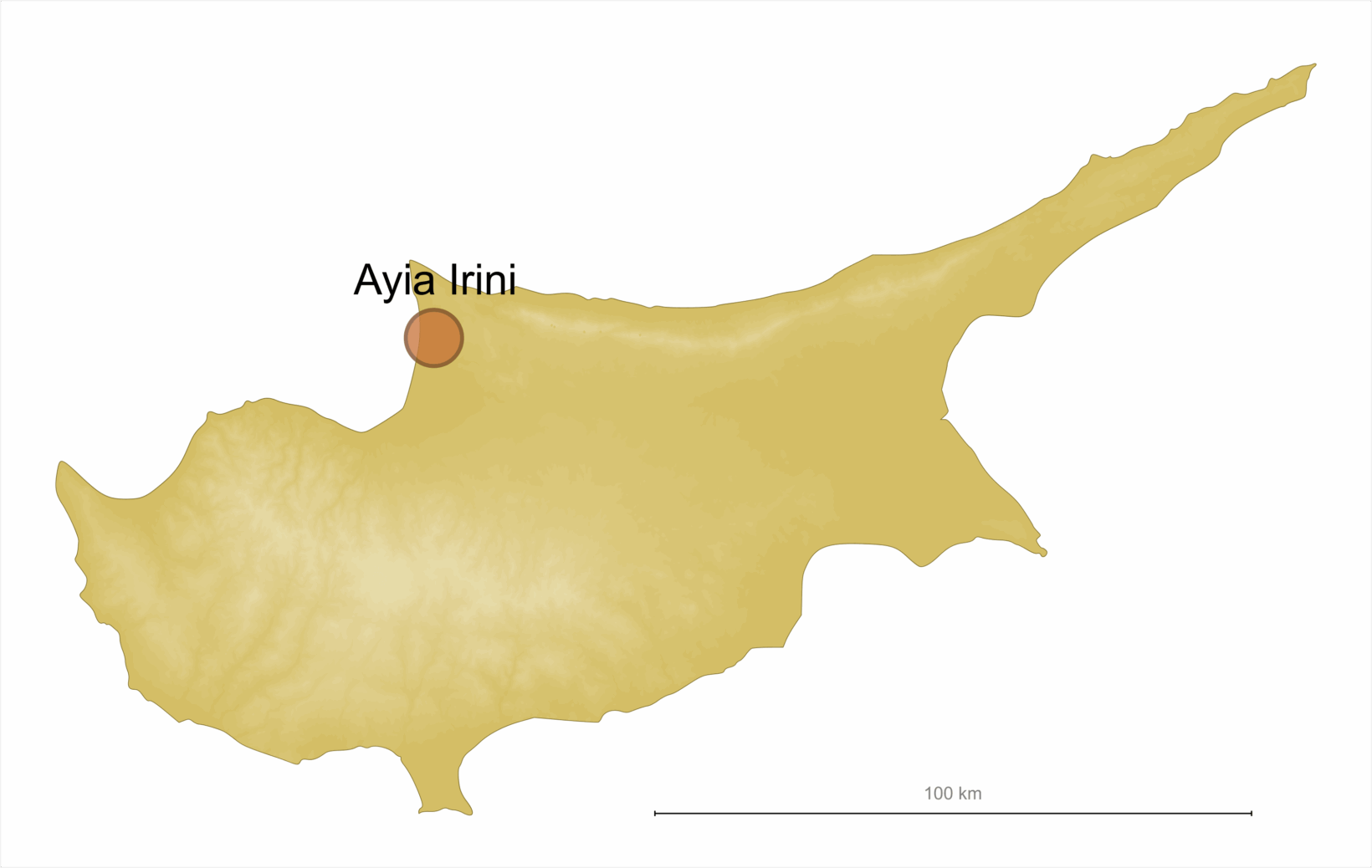
Ayia Irini is a small village near the north-west coast of Cyprus situated on a rock plateau. This rock plateau has only a thin layer of overburden, and the area seems barren and sterile. On the other side of the valley is a necropolis with rock-cut tombs dating from the Late Bronze Age to the Roman period, and ruins of a small ancient town can be seen further down towards the sea. The earliest finds seen here are from the Hellenistic period.
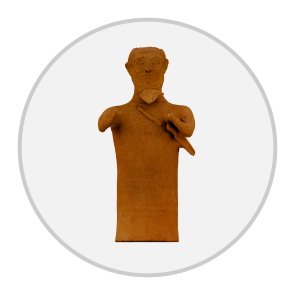
In November 1929, a priest by the name of Papa Prokopios came to the Cyprus Museum in Nicosia and gave them a present. It was the upper part of a terracotta statue from the 6th century B.C. He had found it on his own field in the village, a place which was to the west, not far from the village church. SCE made a preliminary examination of the find spot and found one of the most important sanctuaries, which turned out to be almost intact. They soon obtained permission to excavate and began the very same month.
The sanctuary of Ayia Irini was constructed at the end of the Late Cypriot III period and was in use until c. 480 B.C. A revival can be detected in the first century B.C. The culture layers represent 7 periods of use, with period 4–6 as the most important (c. 700–500 B.C.) [Source: Translated from Marie-Louise Winbladh The sites of the Swedish Cyprus Expedition]