Between 25 and 29 May 2026, a special edition of the EuroMed conference series was held. It explored the intersection of cultural heritage and digital innovation. The event was under the auspices of the Cypriot presidency of the Council of the European Union and the deputy minister for cultural heritage of Cyprus. It took place at Cyprus University of Technology in Limassol, Cyprus.
The UNESCO Chair on Digital Cultural Heritage (CUT) hosted the EuroMed2026 Digital Heritage Summit, co-organised with Heritage Malta. The summit included high-level dialogue and strategic policy discussions. It also featured hands-on experimentation and collaborative innovation. Researchers, curators, technologists, educators, policymakers, and creatives gathered to discuss and recommend ways to advance European research, innovation, and best practices in cultural heritage digitisation and its societal role.
Pre-event: 25 May 2026
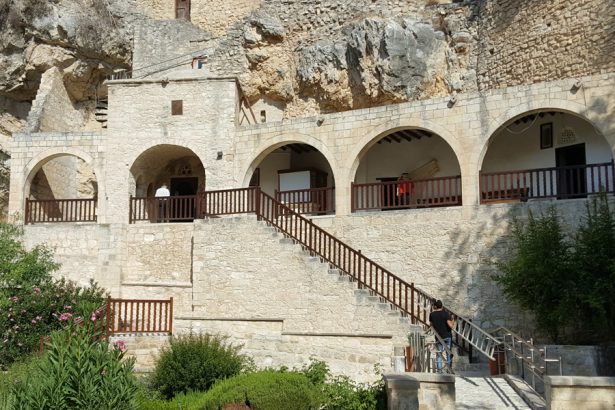
On 25 May, representatives of the Europeana Network Association (ENA) held a public forum and awareness event, “Building Cultural Bridges, Shaping Shared Futures: The Power of the Europeana Network Association Community”, with the specific intent of engaging a broad base of Cypriot cultural heritage stakeholders, users and educators. Held under the auspices of the Commissioner for the Development of Mountain Communities, attendees heard about the advances in access to European cultural heritage through the Cultural Heritage data space, practical examples of digital heritage reuse and its benefits to local communities, how to place new digital material into Europeana and the results of the TwinIt! Initiative with special reference to Cyprus’s contribution this year, the Enkleistra of Saint Neophytos, Paphos, Cyprus.
⦿ See the programme
⦿ See the photo gallery
⦿ See the recorded live stream
Day 1: 26 May 2026
The day was opened by welcome addresses by Drs Marinos Ioannides and Athos Agapiou from the UNESCO Chair on Digital Cultural Heritage and Digital Heritage Research Centre MNEMOSYNE at Cyprus University of Technology, Dr Konstantinos Kleovoulou, Director of Research and Innovation, Deputy Ministry of Research, Innovation and Digital Policy and H.E. Dr Lina Kassianidou, Deputy Minister of Culture, Cyprus Government.
The first session of the day presented the final results of the EUreka3D-XR project, highlighting the potential for reuse of digital cultural heritage assets through virtual and extended reality and underlined by the keynote presentation “Sustainable digital heritage practice is Europe’s digital future in the making” by Professor Isto Huvila, Uppsala University.
Following on from this practical example of reuse, the afternoon was dedicated to two policy discussion round tables, the first focusing on the achievements and ambitions of the TwinIT! Initiative entitled “3D and AI for Europe’s culture and heritage” from Rehana Schwinninger-Ladak of the European Commission, Harry Verwayen, General Director of the Europeana Foundation, Dr Demetris Skourides, Chief Scientist of the Republic of Cyprus, and Dr Marco Medici, Coordinator of the 3D-4CH Online Competence Centre in 3D for Cultural Heritage. Chaired by Sofie Taes, Chair of the Europeana Network Association, the panel included Dr Ines Vodopivec, Secretary General of AI4LAM, and Prof. Stefanos Kollias, Chairman of the Board of the National Infrastructures for Research and Technology (GRNET).
The second roundtable, “Why we Digitise Cultural Heritage, its Use & Reuse; Persistent Virtual Worlds and AI”, saw an expert panel chaired by Mr Anthony Cassar of Heritage Malta, discuss the motivations for digitisation and how the use of the data created aligns with those needs and European policy. The panel included Anne Bajart Head of Unit for Interactive Technologies, Digital for Culture and Education at the EC – DG CONNECT, Xavier Rodier is the scientific coordinator of the European Cloud for Heritage OpEn Science (ECHOES) project, Valentina Vassallo Science and Technology in Archaeology and Culture Research Center (STARC) at The Cyprus Institute, Dr. Aggelos Gkiokas director of TechnAI: Technology, Culture and Society, Mikel Borras coordinator HERITALISE, Antonella Fresa coordinator, Eureka3D/Eureka3D-XR, and Dr Xenophon Zabulis the Institute of Computer Science of the Foundation for Research and Technology – Hellas (FORTH)
⦿ See the programme
⦿ See the photo gallery
⦿ See the recorded live stream
Day 2: 27 May 2026
Day two of the Summit saw the commencement of HackIt!4EU, a pan-European hackathon organised by the Europeana Initiative and the European Commission to innovate with 3D digital cultural heritage from the TwinIt! Part II campaign.
Both the Poster and Innovation Expos were officially started (running until the end of the Summit). Posters and their abstracts are available online at the Digital Heritage Summit website, and the Summit was delighted to facilitate exhibits for Heritage Malta (Malta), INICS – Information Consulting & Solutions Ltd. (Cyprus), SMARTTECH 3D Metrology (Poland) and Tornado Studios (Hungary) from the commercial sector and project examples from Horizon Europe projects IMPULSE, STECCI, HERITALISE, and UNICHE, Interreg VI-A: Italia – Malta CHORAL, and the Digital Europe Programme EUreka3D-XR, 3DbigDataSpace and XRculture.
In parallel, two sessions were held on the subjects of digitising the 2D past and 3D reconstruction and knowledge. Chaired by Dr Marinos Ioannides, UNESCO Chair on Digital Cultural Heritage at the Cyprus University of Technology, the morning round table saw a panel comprising Prof. Antonia Moropoulou, National Technical University of Athens, Mikel Borras, coordinator of the HERITALISE project, Dr Alberto Mendikute Garate, Head of Digital Heritage at Tekniker, Dr Aggelos Gkiokas, director of TechnAI: Technology, Culture and Society and George Ioannidis, IN2 Digital Innovations GmbH, followed by a robust discussion with delegates.
The second parallel session saw Dr Julia Schnitzer, UNESCO Chair for Digitalisation of Cultural Heritage in MENA Crisis-Affected Regions at Brandenburg University of Applied Sciences; Anthony Cassar, Heritage Malta; Mikel Borras, coordinator of the HERITALISE project; Prof. Sander Münster, Friedrich Schiller University Jena; and Dr Georgios Toubekis, Fraunhofer Institute for Applied Information Technology FIT, form the panel.
A final session concluding the second panel, entitled “The Heritage Digital Twin”, introduced the work of the ECHOES initiative and data-driven cultural heritage research and considered the complexity of knowledge management and the importance of paradata for understanding the provenance of data and the heritage it represents. The panel consisted of Sorin Hermon, The Cyprus Institute; Anthony Cassar, Heritage Malta; Mikel Borras, coordinator of the HERITALISE project; and Antonella Fresa, coordinator of Eureka3D/Eureka3D-XR.
⦿ See the programme
⦿ See the photo gallery
⦿ See the recorded live stream
Day 3: 28 May 2026
The third day of the summit was opened by Prof. Evangelos Akylas, Vice-Rector of Financial Planning and Development, Cyprus University of Technology. Two round table discussions entitled “Visualising the Past” and “AI, Virtual Worlds and Ethics”. The first session, chaired by Tony Cassar, Heritage Malta, presented the importance of multidisciplinary collaboration in cultural heritage for understanding the past through different perspectives and how the past informs us today and in the future. The session used the STECCI project as a concrete example of this approach. The panel consisted of Profs. Nusret Drešković, Saida Ibragić and Edin Bujak, University of Sarajevo, Profs. Snežana Radulović and Božidar Radulović, University of Novi Sad, and Dr Abdelrhman Fahmy, Rathgen Research Laboratory at the State Museums of Berlin. The session was concluded by an inspired keynote presentation, Virtual Photography of Archaeological Uncertainty: Standardising Professional Practice in Heritage Visualisation, by Prof. Dominik Lengyel of Brandenburg University of Technology.
The second panel session was chaired by Dr Marinos Ioannides, composed of Prof. Żaneta Żegleń, Jagiellonian University Museum and coordinator of the IMPULSE project; George Ioannidis, IN2 Digital Innovations GmbH, representing the XRculture project; Dr Xenophon Zabulis, FORTH; and Prof. Sander Münster, representing the Time Machine Foundation.
In addition, the final workshop for the CONNECTING project was held, showcasing the infrastructure and equipment acquired through the project, including advanced UAV platforms, LiDAR systems, terrestrial laser scanning technologies, underwater robotic platforms, cloud-based data management solutions, and other state-of-the-art sensing systems. Presentations demonstrated how these technologies can support the acquisition, processing, analysis, and dissemination of high-quality spatial and environmental data for both terrestrial and underwater cultural heritage applications. The workshop also highlighted the importance of open and reusable digital datasets, demonstrating how research infrastructures can generate long-term value for the wider scientific and cultural heritage communities.
The concluding remarks for the day’s sessions were given by Chrysanthos Pissarides, President of the ICOMOS National Committee for Cyprus.
The day concluded with the results of the HackIt4EU! Pan-European Hackathon for digital cultural heritage organised by the Europeana Foundation and the European Commission. In the student track, five teams of school pupils competed, with the judges complimenting the innovative use and interpretation of cultural heritage, highlighting the synthesis of both tangible and intangible aspects within all of the projects. For the professional track, nine teams each presented their concept and results in a rapid-fire series of five-minute presentations before the judges retired to deliberate.
● Put.is HeriTrace: A digital heritage curation platform for the age of AI
● Street Stories: Every wall has a story to tell
● Pankyprion LyKion Larnakas: Cyprus Heritage Quiz
● Aphrodites’ Team: Aphrodites’ Trail
● Fosteirastonmakaron Productions: CyprusPlanner – Redefining Travel through AI and Digital Heritage
● The Pixelated Past: Guardians of the Island Treasures
● Team Grand Tour: From Delos to the Deep – The Grand Tour Final Crossing
● Heritage Malta: Ġgantija Temple Experience
● The Artificial Team: HerStories of Antiquity
The judges selected the Pixelated Past’s Guardians of the Islands Treasures as the winner of the professional track, with Fosteirastonmakaron Productions’ CyprusPlanner receiving an honourable mention.
⦿ See the programme
⦿ See the photo gallery
⦿ See the recorded live stream
Day 4: 29 May 2026
The final day of the summit was dedicated to the theme of digitisation as a tool against illicit trafficking. The policy roundtable was chaired by Benjamin Omer, Jean Moulin – Lyon 3 University and the French National Police College. The expert panel consisted of Prof. Véronique Chankowski, Director, French School at Athens and Coordinator of the ANCHISE Project; Dr Marinos Ioannides, UNESCO Chair on Digital Cultural Heritage; and Prof. Antonia Moropoulou, representing the Technical Chamber of Greece.
The first session focused on the current landscape in the fight against illicit trafficking of cultural heritage were given by Eleanor Fink Former ICT Director Getty Foundation, Thomas R. Kline Lawyers’ Committee for Cultural Heritage Preservation, Axel Kerep representing the PARCS Society and joined by Prof. Monika Hagedorn-Saupe President of the German Society for Information & Knowledge, and Dr. Oscar Alarcón-Jiménez representing the secretariat of the Nicosia Convention the Council of Europe.
The second session considered the missions of a European Competence Centre for combating illegal trafficking. The panel consisted of Valentina Vassallo, The Cyprus Institute, Prof. Petros Patias, Aristotle University of Thessaloniki (AUTH), Dr Noah Charney, founder of the Association for Research into Crimes against Art, Corinne Szteinsznaider, Michael Culture Association and Xavier Rodier, Université de Tours/ECHOES project. The session was concluded by Marie-Véronique Leroi, French Ministry of Culture.
Marco Fiore, policy manager of the Michael Culture Association, was invited to the stage to present a proposal for the establishment of a European Interdisciplinary Competence Centre against illicit trafficking of cultural heritage.
The final high-level roundtable panel consisted of Sneška Quaedvlieg-Mihailović, Secretary General, Europa Nostra, Efthymios Shaftacolas, Department of Antiquities of Cyprus, Prof. Marinos Ioannides, UNESCO Chair on Digital Cultural Heritage, Marie-Véronique Leroi, French Ministry of Culture, Charalampos Geroriadis, Aristotle University of Thessaloniki (ENIGMA project) and was chaired by Prof. Véronique Chankowski, Director, French School at Athens, addressing the question of institutional support for the proposal.
The session was concluded by Prof. Véronique Chankowski, summarising the challenges that the European Competence Centre for combating illegal trafficking faces.
⦿ See the programme
⦿ See the photo gallery
⦿ See the recorded live stream