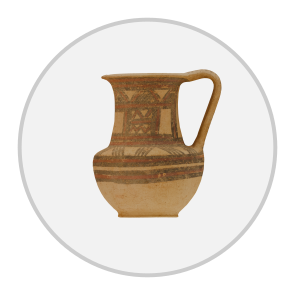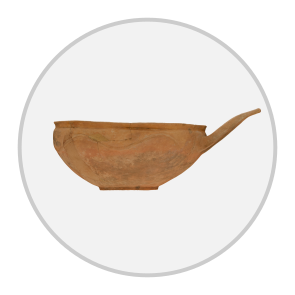
In 1928 some illicit diggings near the village of Millia were reported to the Cyprus Museum by the police. Some of the diggers were caught and a few vases brought to the Museum. As some of the pots were foreign SCE became interested and asked for and obtained a licence to carry out an investigation of the site, which took place in February 1928.
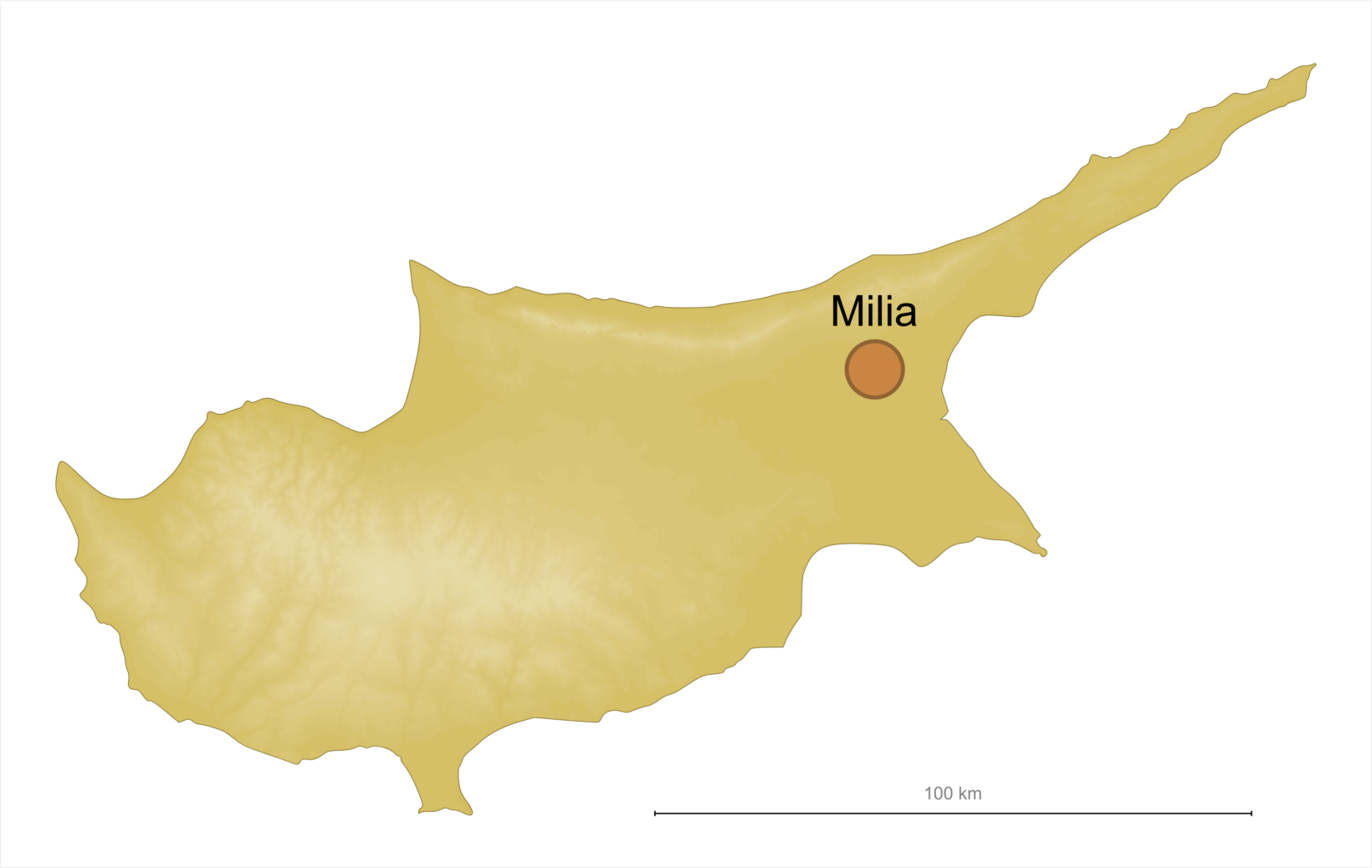
Millia is 18 km north west of Famagusta. All around the village tombs were cut in the rock and a brief examination of the part south of the village showed that many of the tombs here had been plundered. They excavated a number of tombs but found only four of them worth publishing.
The tombs were all of the normal type with a dromos and a burial chamber. One of them was empty but the others had a lot of burial gifts, quite a few of the vases having been imported either from Syria or Greece. A certain reuse of the tombs could be shown from the findings. They can be dated to the Late Cypriot I–II (1600–1200 B.C.). [Source: Translated from Marie-Louise Winbladh The sites of the Swedish Cyprus Expedition]