Globally, many indigenous communities have long viewed water through the lens of living, intangible heritage, a repository of sacred sites, historical memory, and ecological understanding. As climate change alters the planet’s water cycles, water management has transformed from a technical challenge into a profound struggle for human dignity and cultural survival. Water is much more than a resource to be measured, piped, and priced; it shapes identity, anchors heritage, and holds memory.
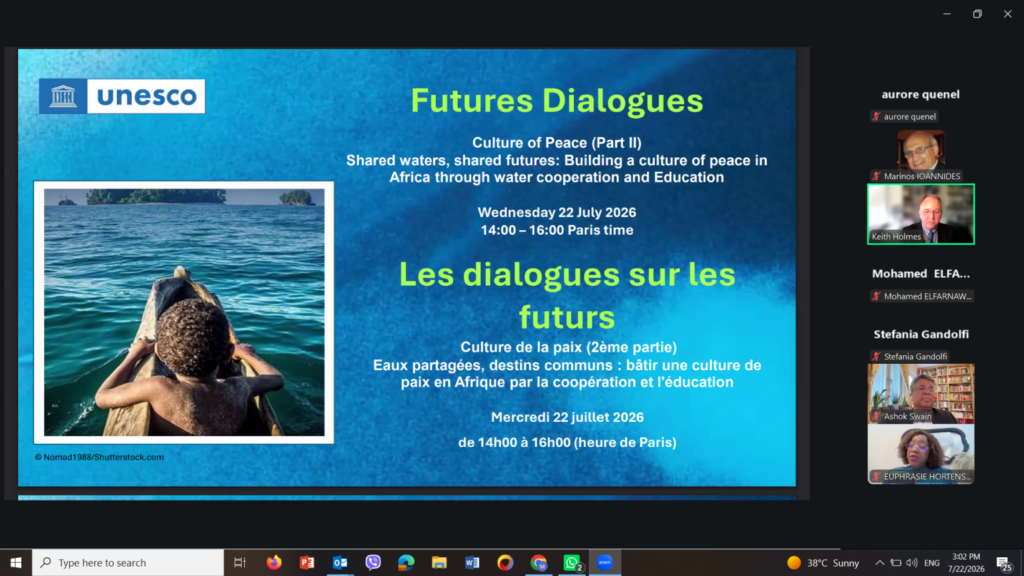
This is why the UNESCO Chair on Digital Cultural Heritage at Cyprus University of Technology participated in the UNESCO webinar, Futures Dialogues: Shared waters, shared futures: Building a culture of peace in Africa through water cooperation and education. Dialogue on culture of peace in Africa on 22 July 2006.
The webinar presented the African Union’s Africa Water Vision 2063 and UNESCO’s Intergovernmental Hydrological Programme to UNESCO Chairs and UNITWIN Networks to further harness the potential of water cooperation and education as vehicles for preventing, mediating, and resolving conflicts and building resilience and a culture of peace.
The UNESCO Chair on Digital Cultural Heritage takes the position that water culture—the shared historical understandings of how societies respect and value water—is a vital asset for climate adaptation. When climate change dries up a river basin, it doesn’t just destroy an ecosystem; it erases the oral traditions, language, and rituals tied to that water body. Protecting this living heritage is essential for local resilience and should be considered as part of the solution. Intangible cultural heritage can contribute significant value and insights, including:
● Hydro-Social Contracts: Community-enforced laws that balance human consumption with ecosystem limits, viewing natural resources as sacred ancestral assets
● Traditional Environmental Knowledge: Time-tested local mechanisms, such as rainwater harvesting and soil-moisture preservation, that help rural societies navigate sudden climate shocks
● Conflict Mediation Protocols: Ancestral frameworks of restorative justice used by elders to peacefully settle cross-boundary water disputes among nomadic and agrarian communities
● Inter-generational Equity: Passing down community stewardship systems from elders to youth, maintaining dignity and sustainability within traditional social structures
While the webinar series is focused on the challenges Africa faces, the discussions and solutions will ultimately inform national and international policy and have a profound impact globally on the way we all think about water and our relationship with it.
The UNESCO Futures Dialogues series
Futures Dialogues aim to identify, analyse and debate emerging issues and trends related to UNESCO’s mandate across education, the sciences, culture and communication. They have a forward-looking, horizon-scanning and observatory function to support much-needed long-term futures thinking in today’s complex and turbulent world.
Past webinars can be found on the UNESCO Futures Dialogues web page HERE
The following webinars are planned
⦿ 16 September 2026: Implications of quantum computing for the future
⦿ 21 October 2026: Open Science and the futures of research assessment
⦿ 4 November 2026: Cultures of care: Museums, heritage and collective futures
⦿ 25 November 2026: Futures beyond 2030
For more information, please contact: [email protected]