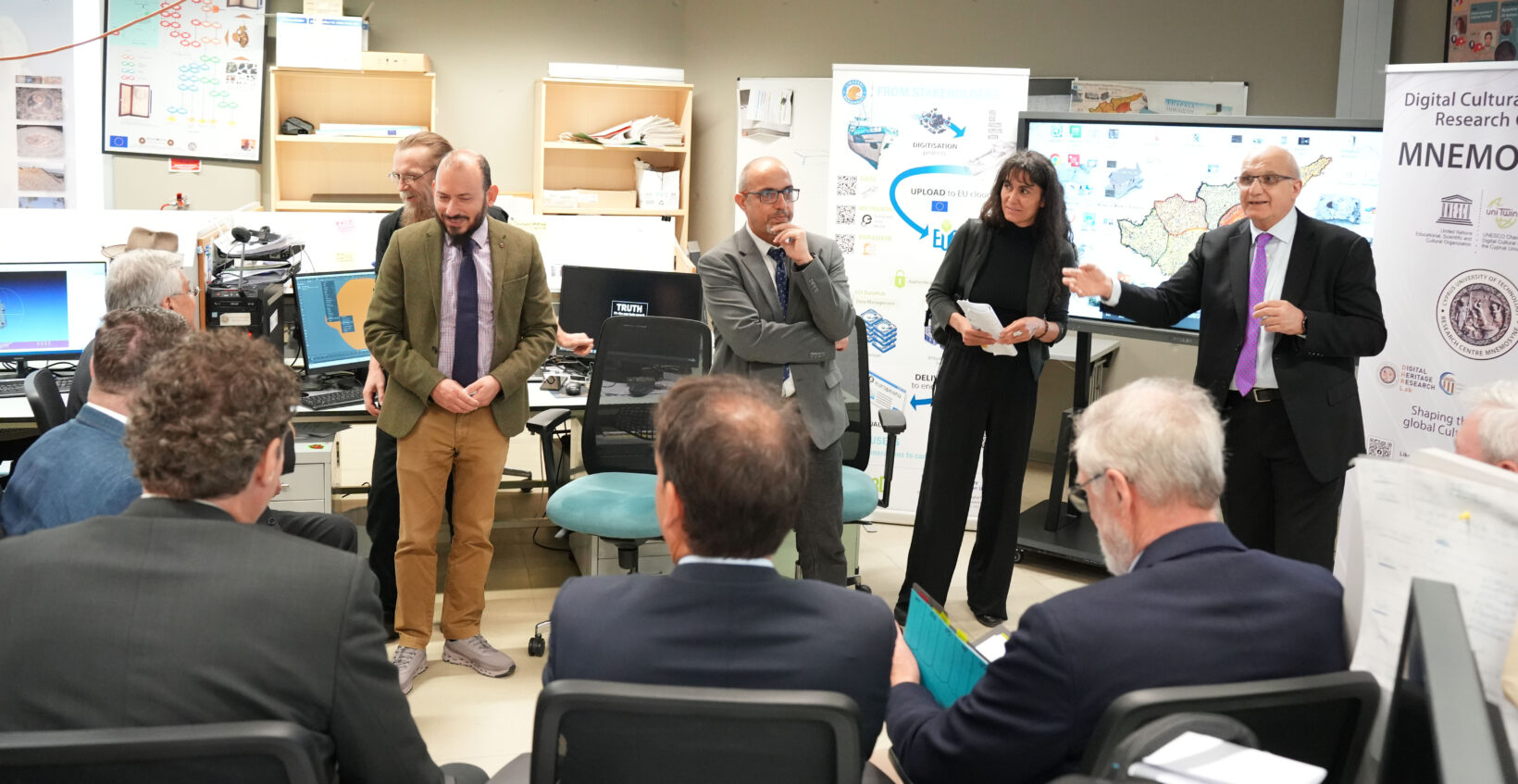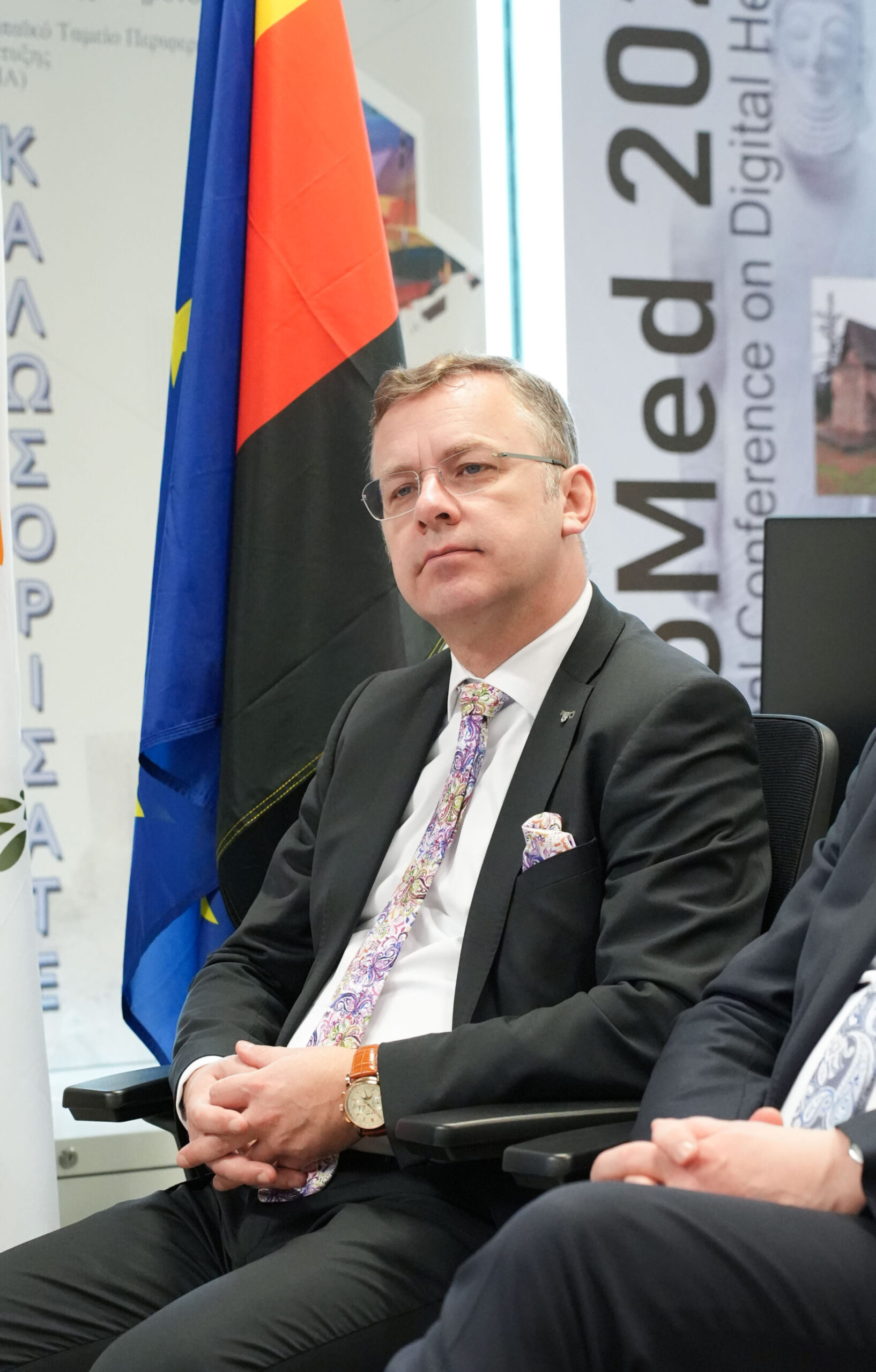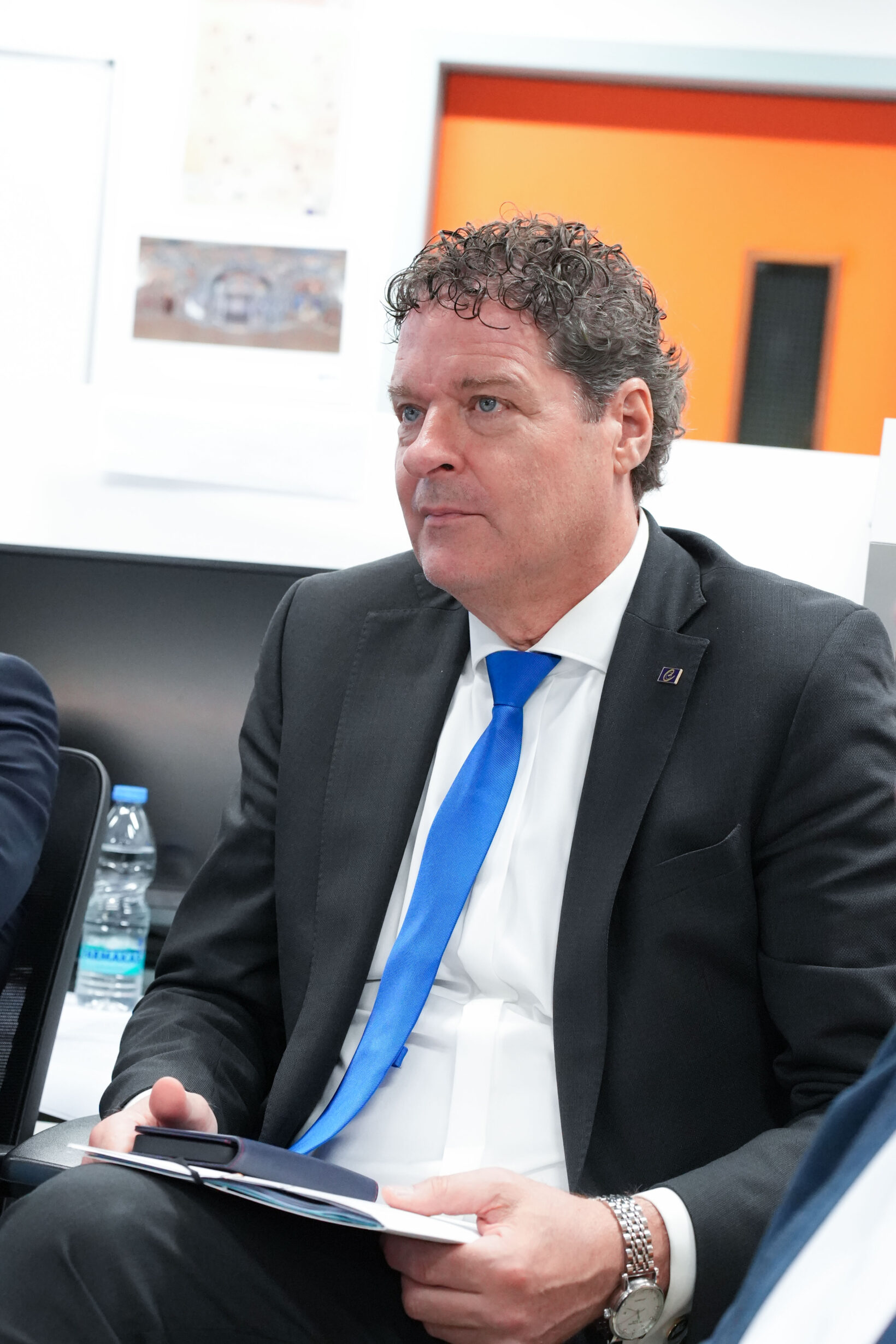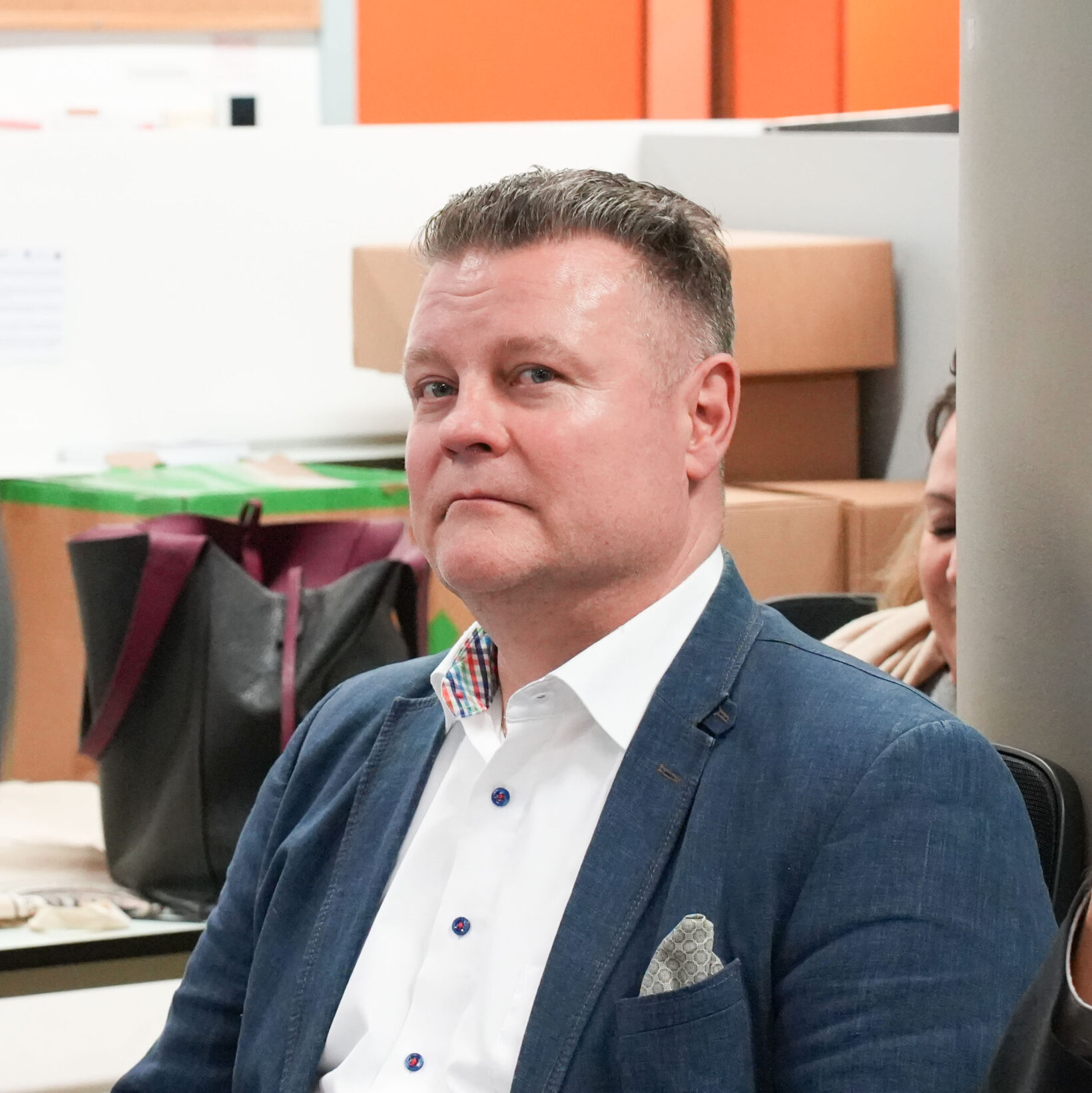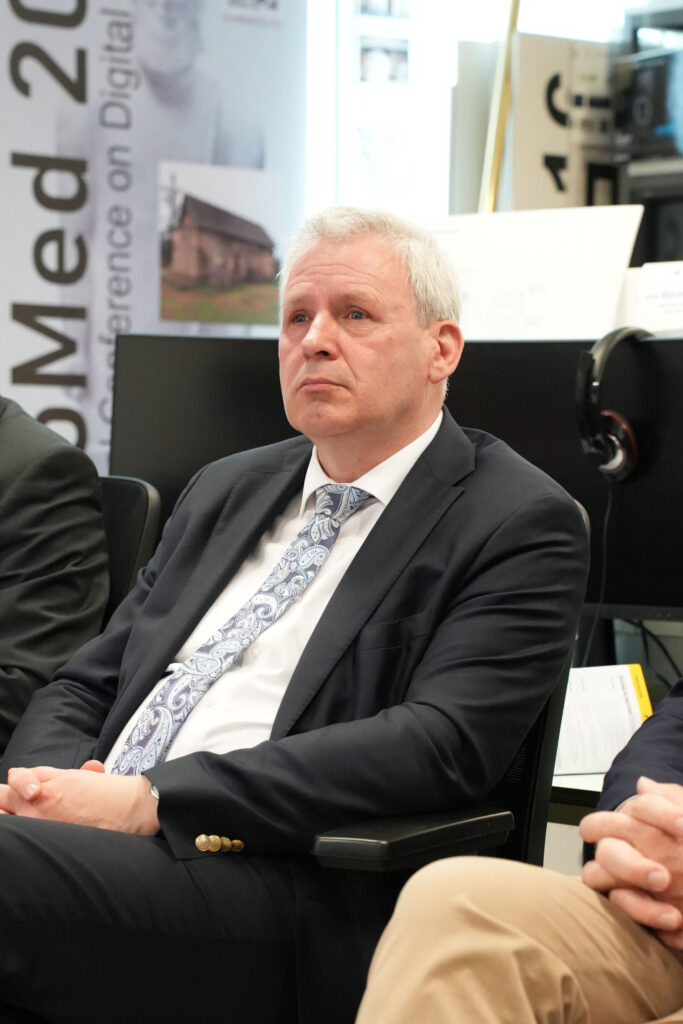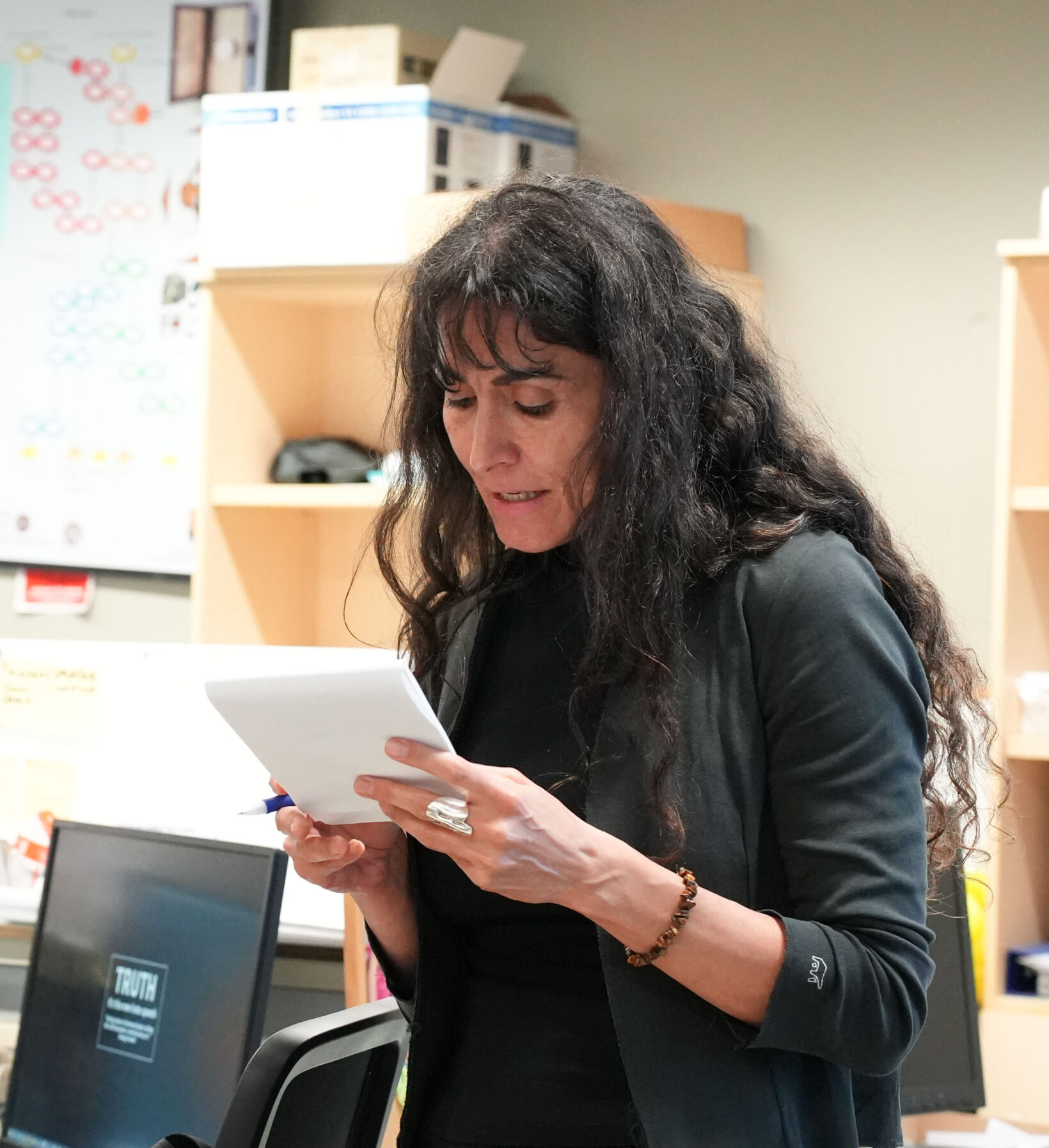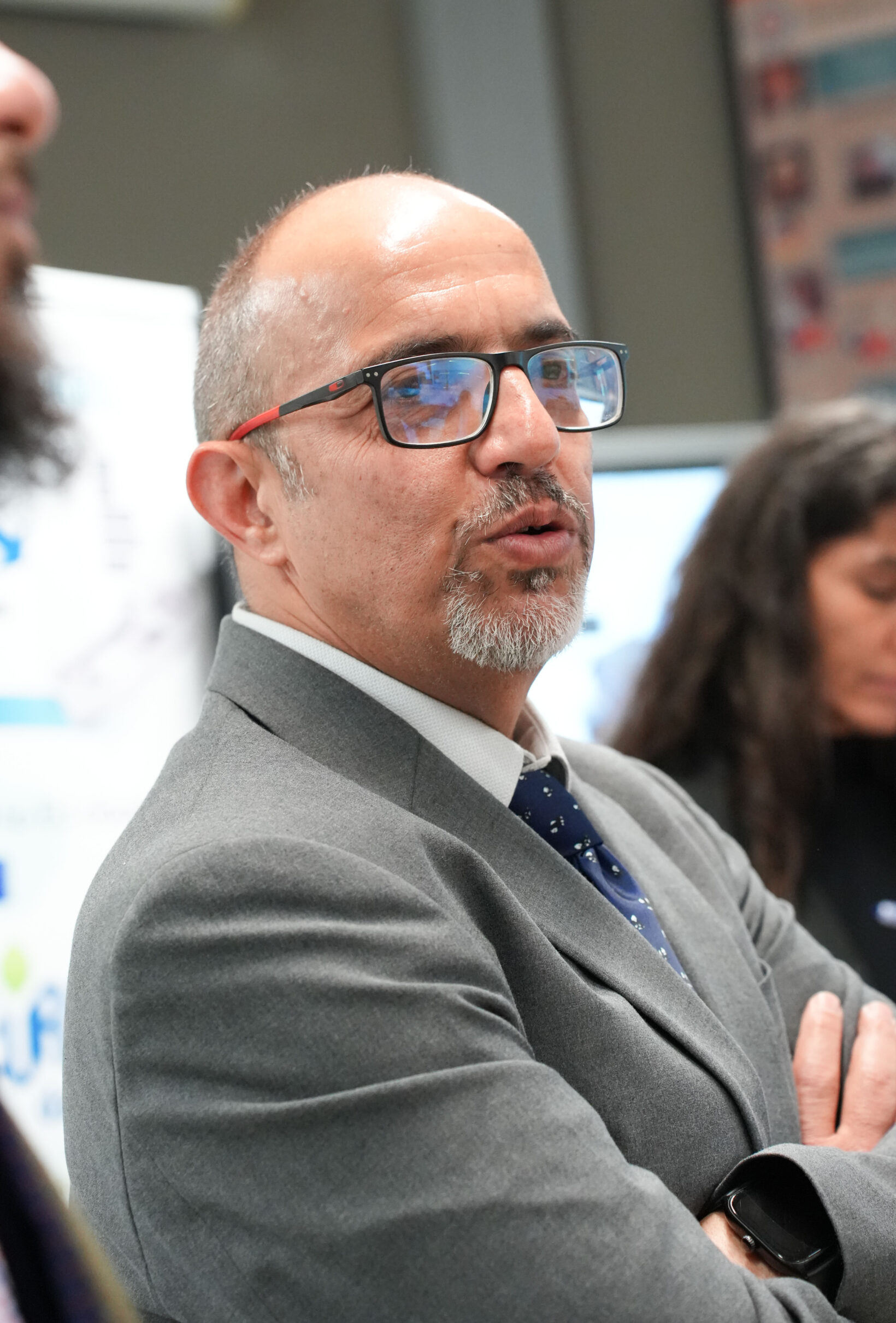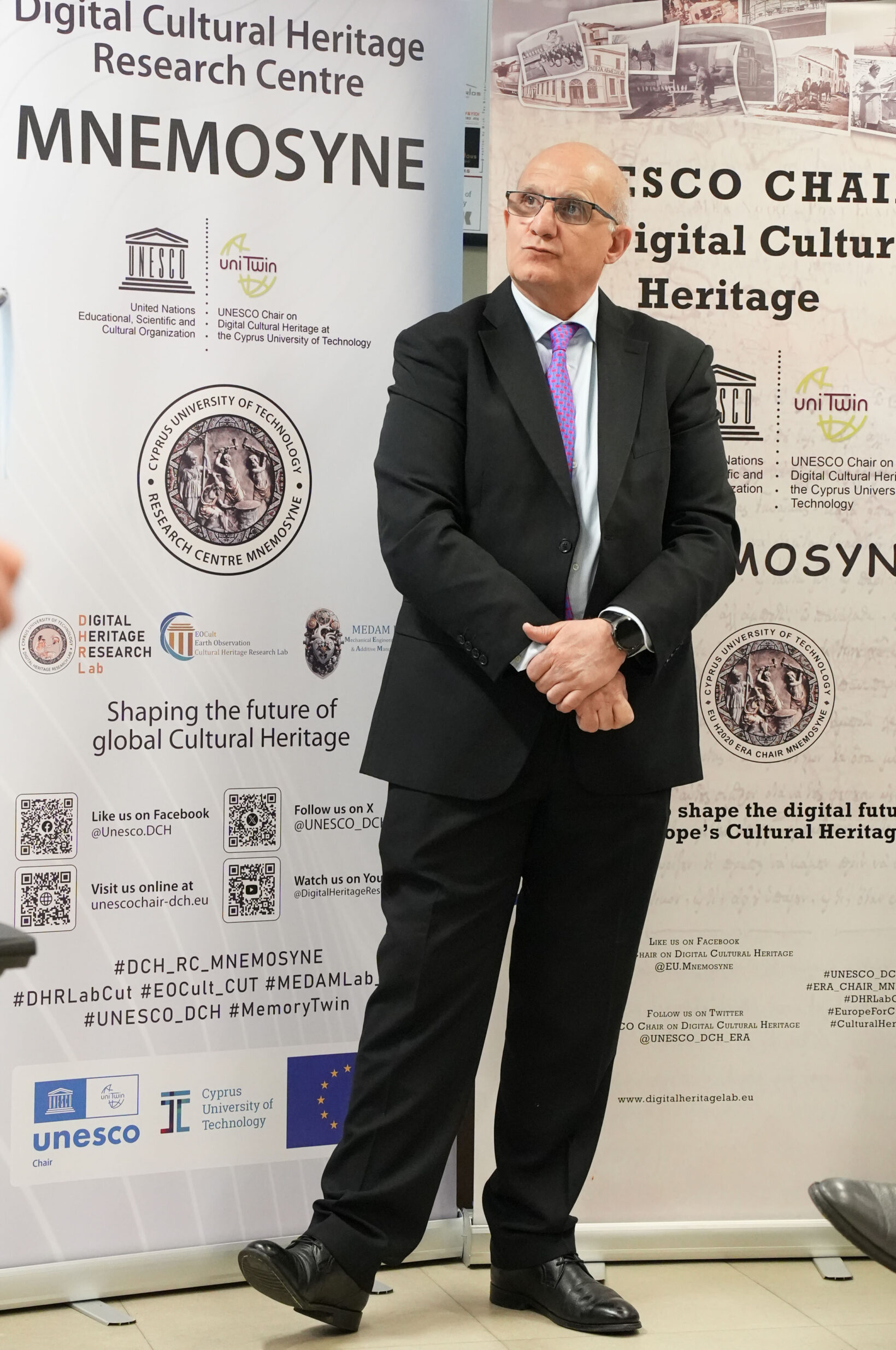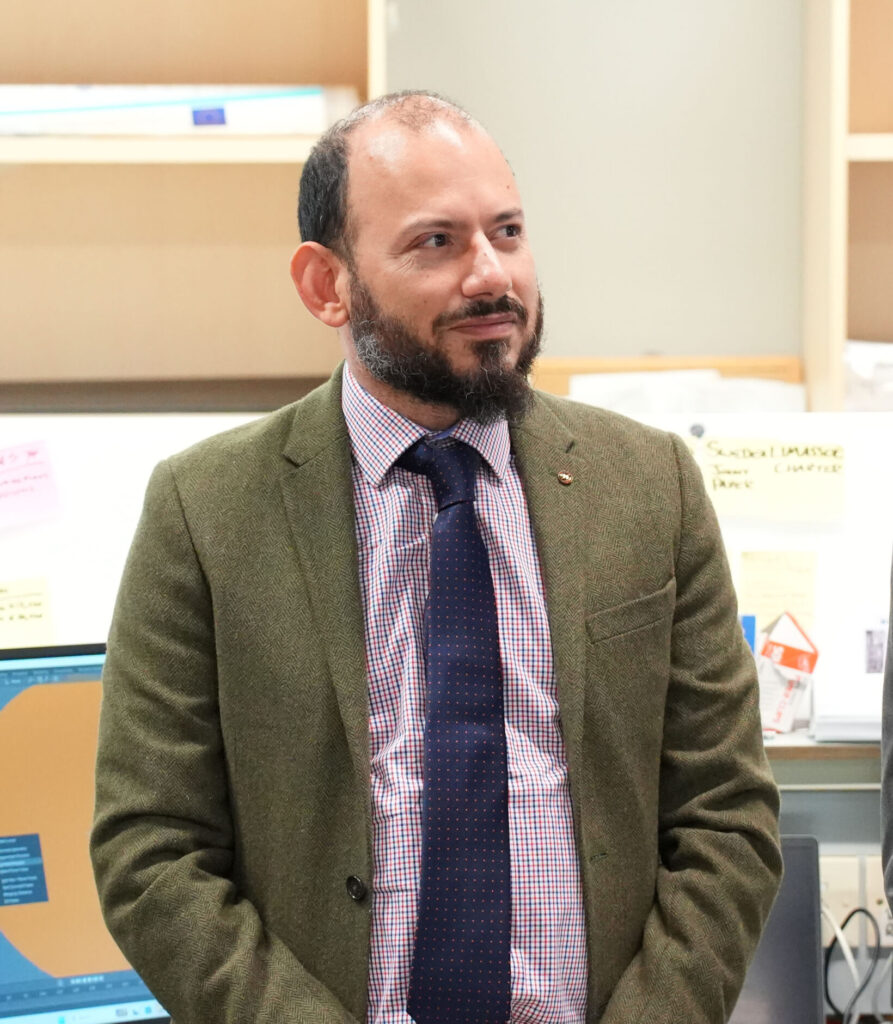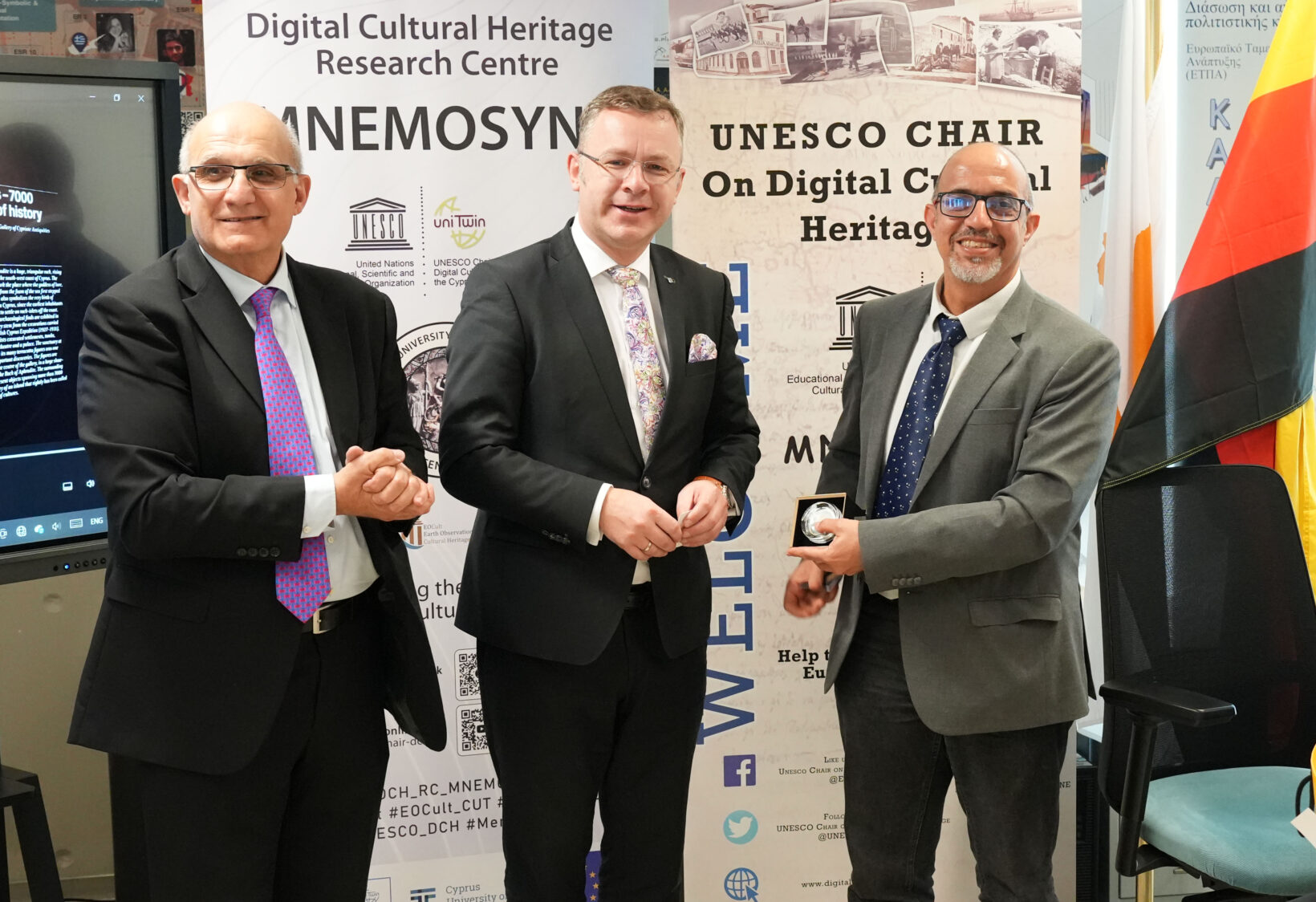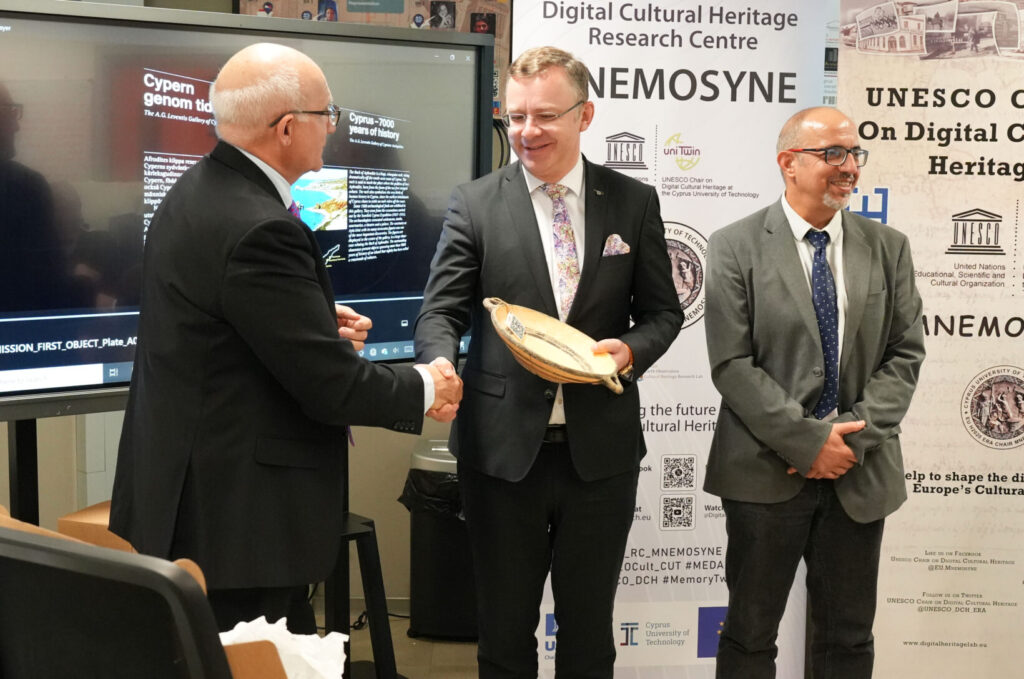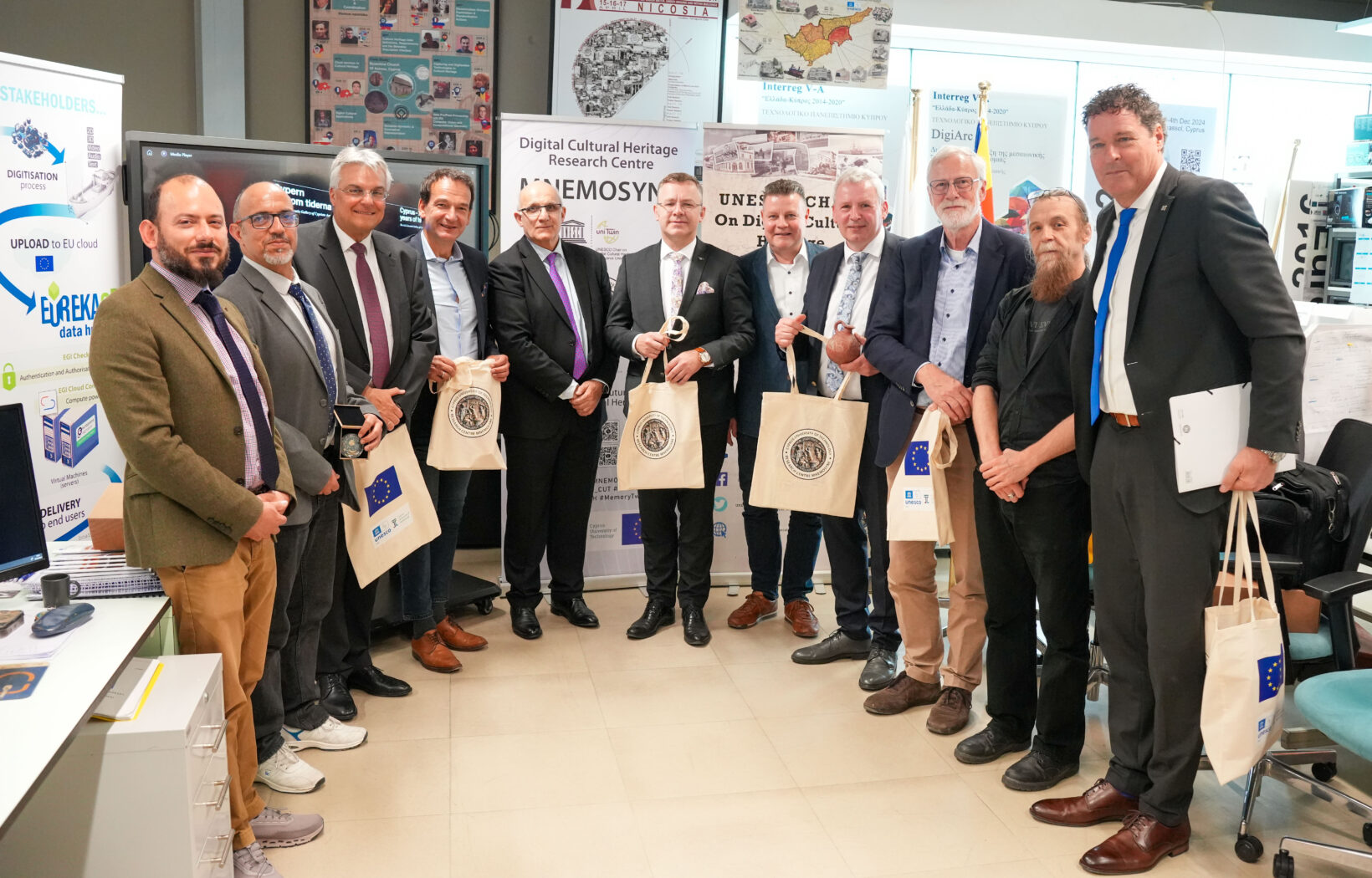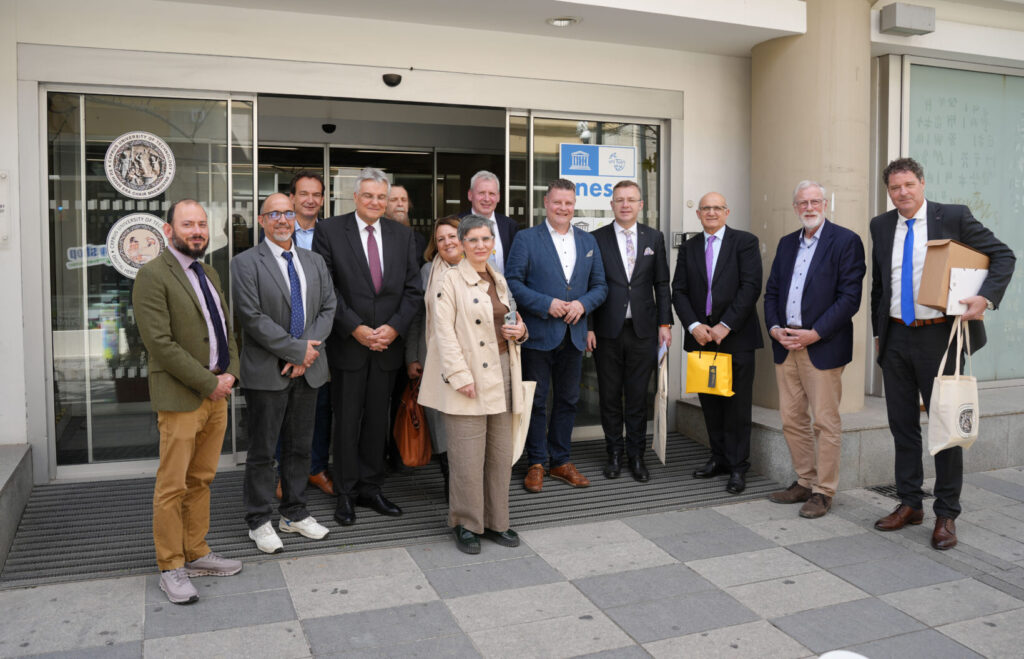
The UNESCO Chair on Digital Cultural Heritage at the Cyprus University of Technology (CUT) had the honor of hosting a high-level political delegation from Germany on 23 March 2026, marking a significant milestone in strengthening international collaboration in the field of digital cultural heritage and advancing the role of science and cultural diplomacy.
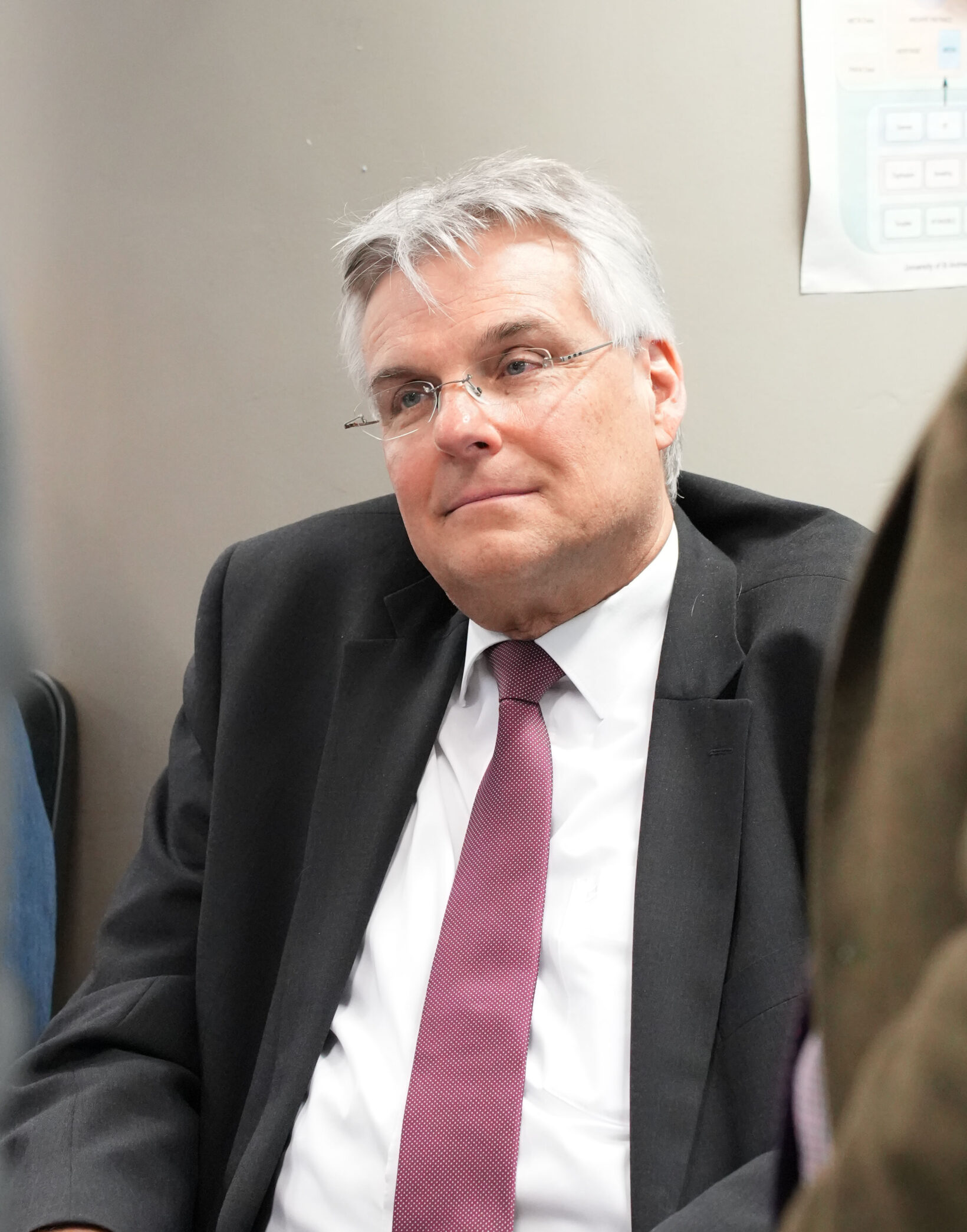
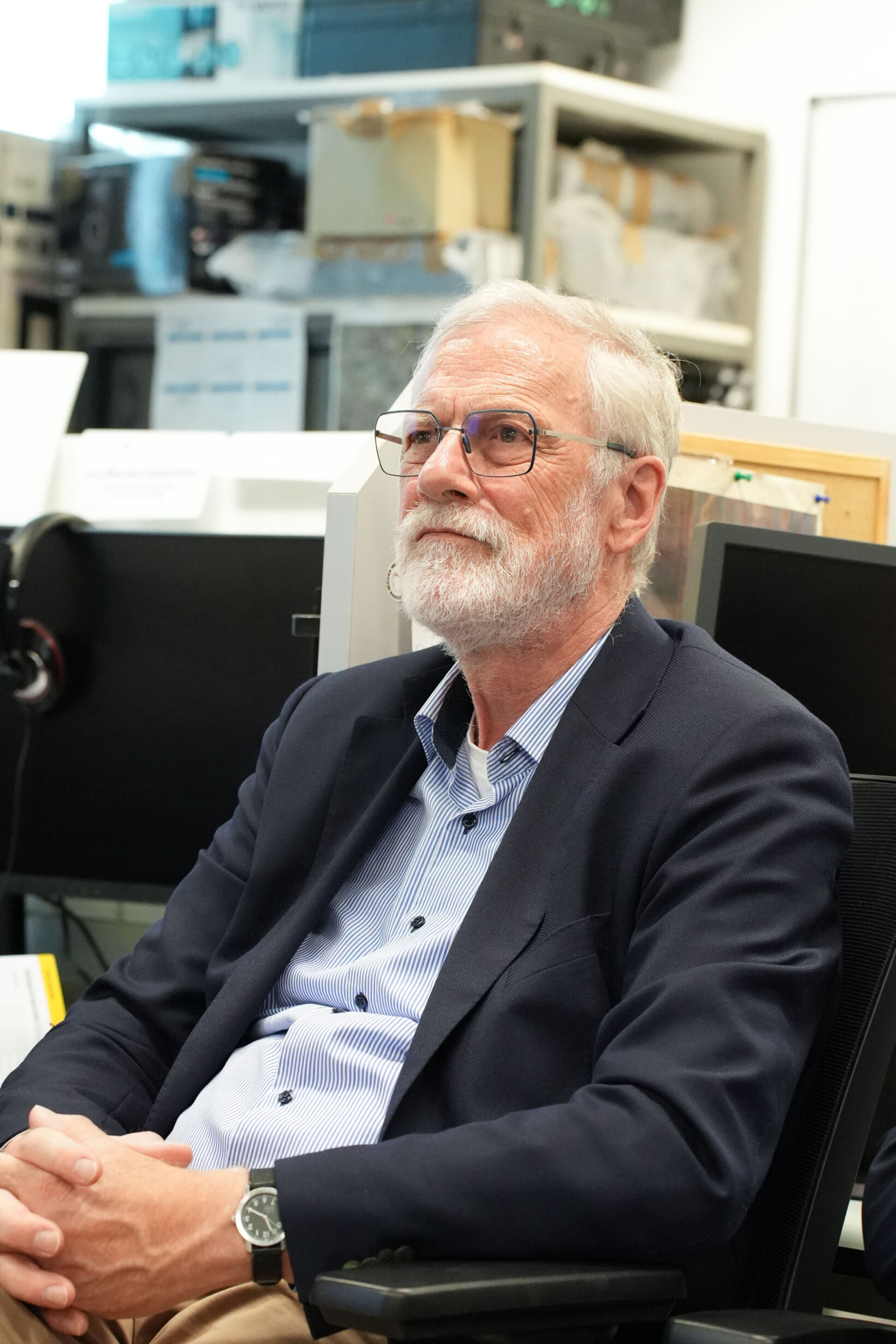
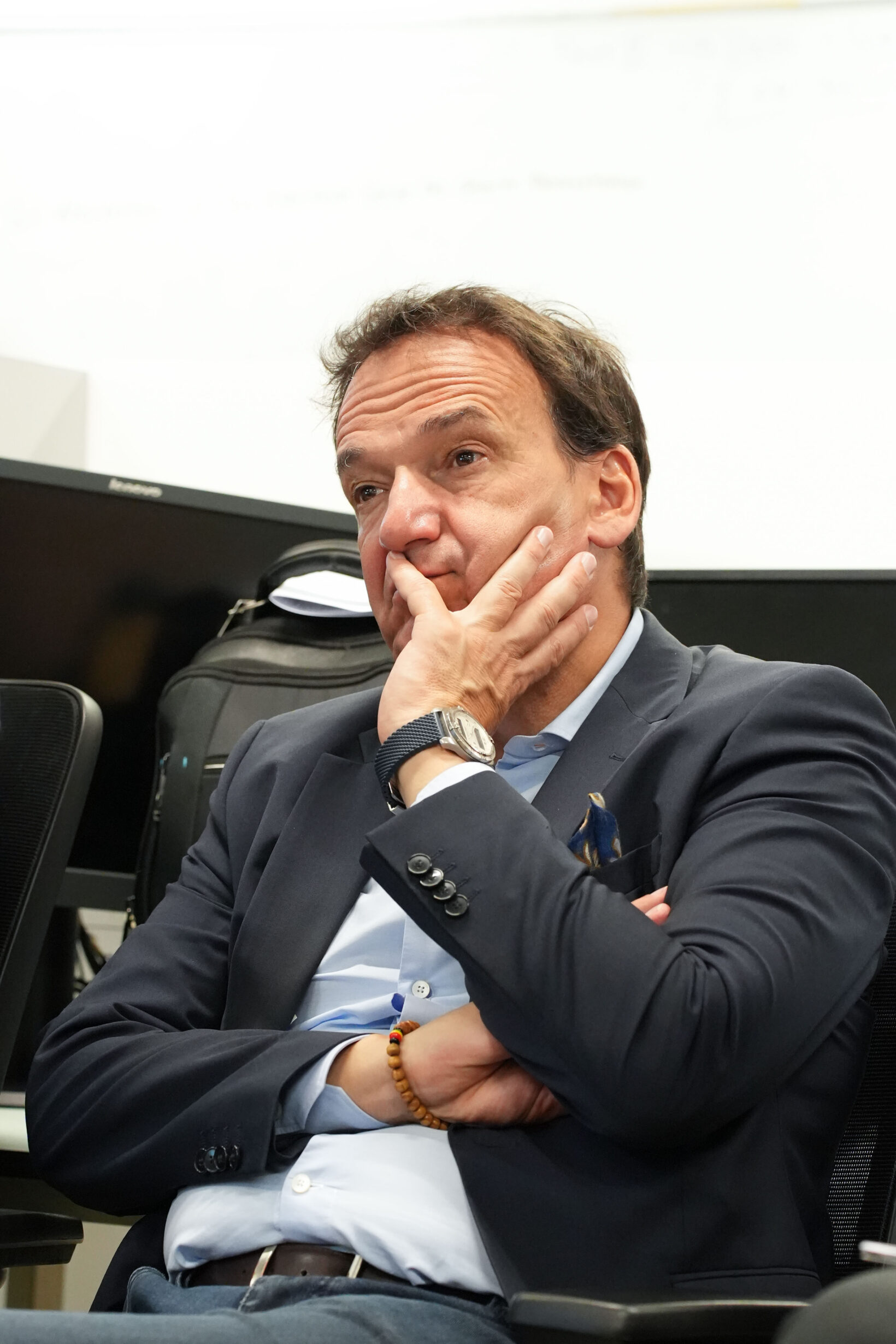
The delegation, composed of five distinguished German parliamentarians from the Stae of Saxony-Anhalt: Mr. Daniel Sturm, CDU Caucus, Committee Chair, Mr. Markus Kurze, CDU Caucus Mr. Holger Hövelmann, SPD Caucus, Mr. Andreas Silbersack, FDP Caucus and Mr. Jörg Drebenstedt, Head of the Committee Secretariat; which was chaired by the Minister of State, Head of the State Chancellery and Minister of Culture Mr. Rainer Robra and led by the German Ambassador to Cyprus, Dr. Hans-Peter Jugel.
The delegation was officially welcomed by the Vice Rector for Academic and Research Affairs of the Cyprus University of Technology, who opened the visit with an introductory address outlining the mission and strategic vision of the University. In his remarks, he highlighted the strong recognition and societal acceptance of the University’s work across research, education, and innovation—at local, regional, and global levels—with particular emphasis on its growing impact within Europe and the European University Alliance of Technical Universities EUt in which CUT is an active member.
In his introductory remarks, Ambassador Jugel expressed his sincere appreciation to CUT for the opportunity to visit the University for the first time and to experience firsthand the dynamic working environment where pioneering developments are being realized. He emphasized that the work carried out at the UNESCO Chair represents outstanding progress not only for Cyprus, but also for Europe and the global community, particularly in the domain of digital documentation, standardization and protection of cultural heritage. The Ambassador also formally introduced the delegation and expressed his strong intention to revisit the University in the near future.
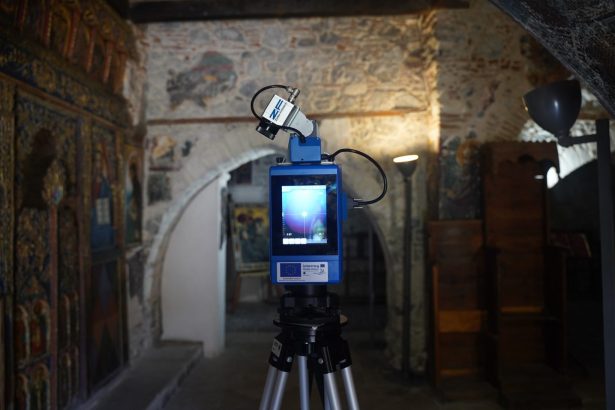
The focus of the visit was a comprehensive presentation and live demonstration of the pioneering work carried out by the UNESCO Chair, including its latest advancements under the newly established MNEMOSYNE Research Center. The Center represents a major evolution in the field, advancing from Digital Twins to Memory Twins through the integration of artificial intelligence and extended reality (XR) technologies—opening new dimensions for the preservation, interpretation, and experiential understanding of cultural heritage.
In addition, the delegation was introduced to the Center’s pioneering work in Earth Observation for cultural heritage, where advanced satellite data and geospatial technologies are employed for monitoring, risk assessment, and protection of heritage sites at scale. Equally, outstanding results were presented in the field of 3D fabrication in cultural heritage, demonstrating how high-precision replicas and reconstructions can support conservation, research, education, and public engagement.
Special emphasis was given to the role of the Digital Heritage Research Lab as the founding pillar of the MNEMOSYNE Research Center. Since its establishment, the Lab has maintained continuous and impactful collaboration with leading institutions across education, research, industry, and key stakeholders, positioning it as an international hub for interdisciplinary excellence and innovation.
Within this context, particular recognition was given to the flagship collaboration with the Medelhavsmuseet in Sweden, focusing on the digitisation of the largest collection of Cypriot artefacts located outside Cyprus. This initiative stands as a model of international cooperation, demonstrating how advanced digitisation technologies can reconnect dispersed cultural heritage and make it accessible to global audiences while reinforcing cultural identity and shared memory.
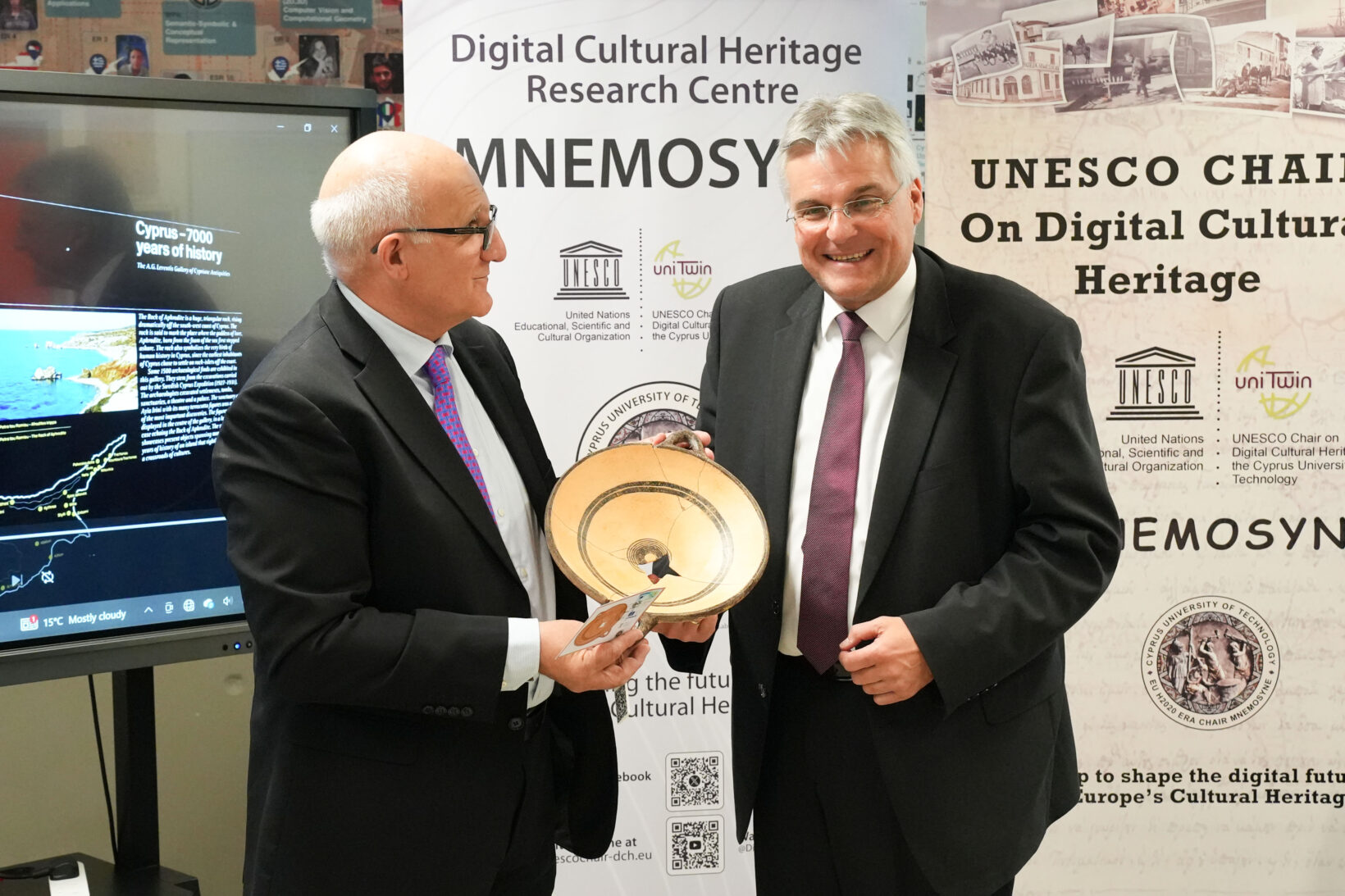
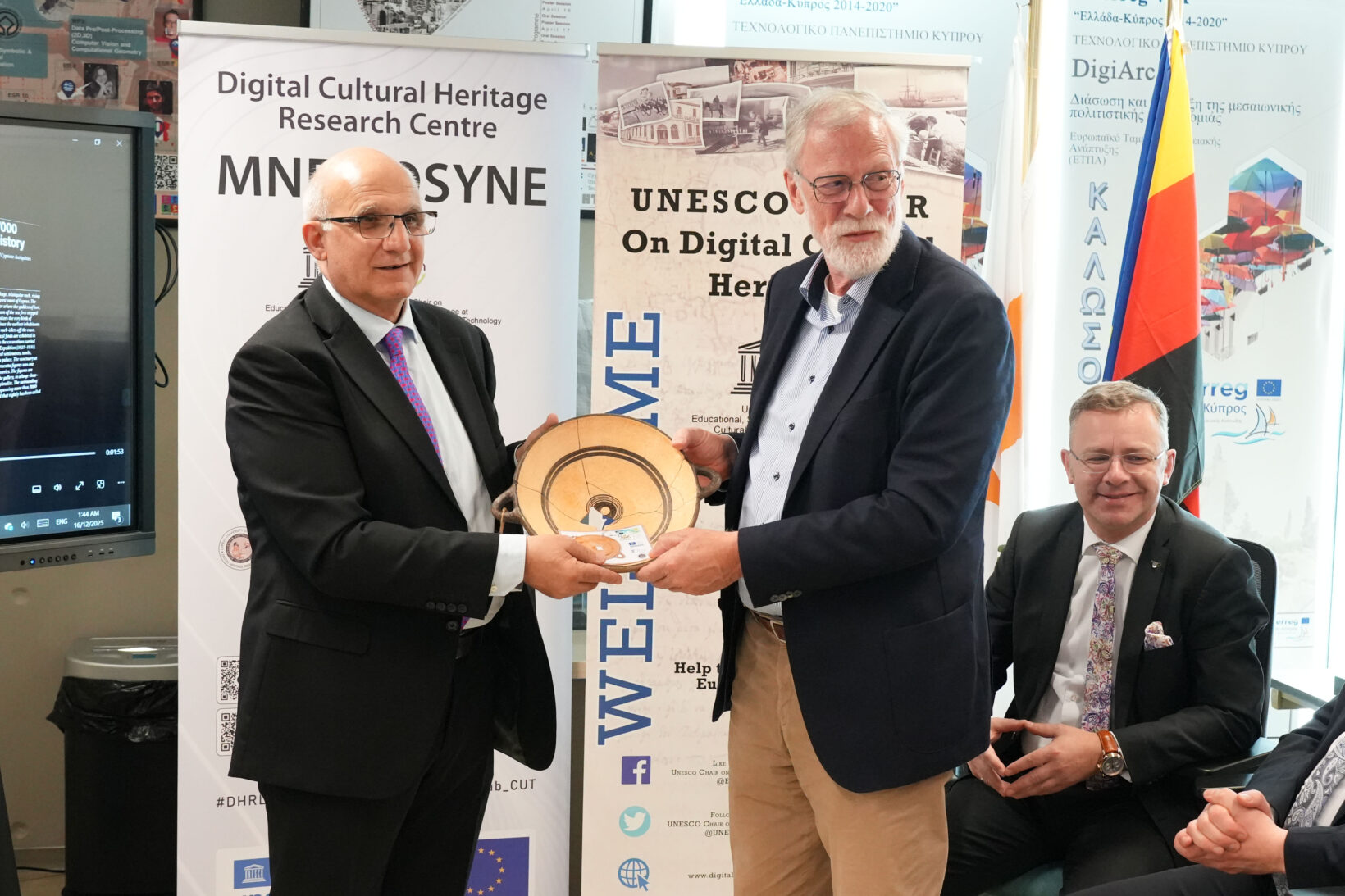
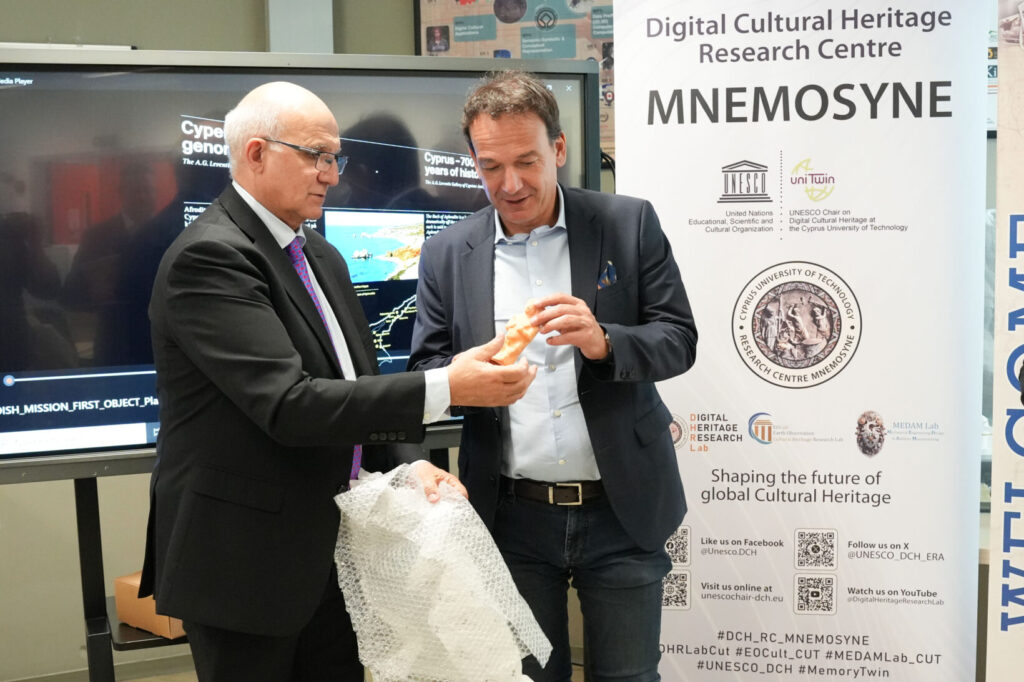
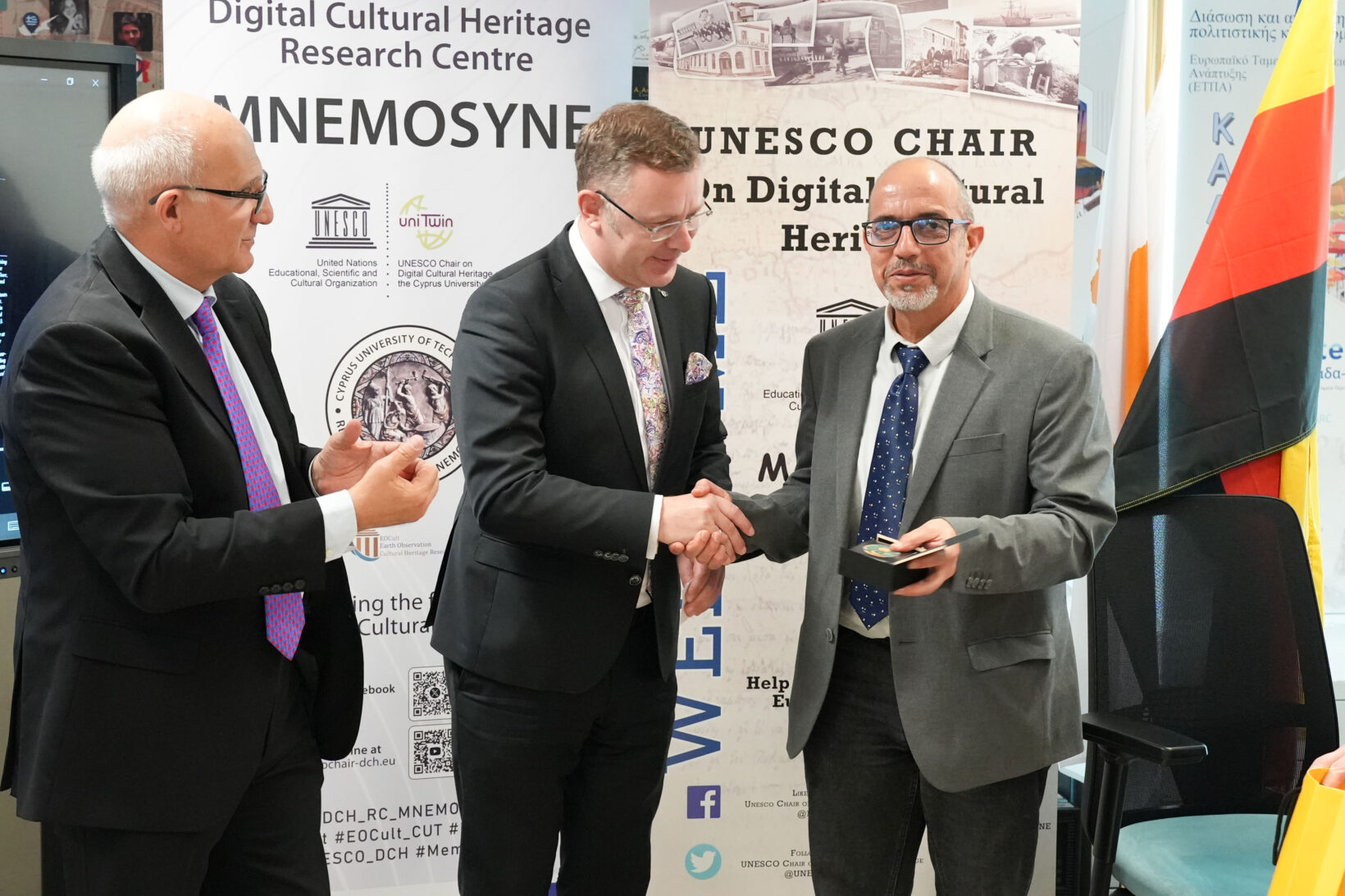
As a symbolic gesture of this collaboration and cultural connection, authentic replicas of Cypriot artefacts from the collection in Sweden were presented to all members of the delegation, reflecting the tangible outcomes of digital documentation and the bridging of cultural heritage across borders.
During the visit, the Minister provided a concise overview of ongoing and planned initiatives in the field of digital cultural heritage in Saxony-Anhalt. These initiatives highlight the region’s strategic commitment to leveraging digital technologies for the preservation, management, and promotion of cultural assets, further reinforcing the strong potential for collaboration between Cyprus and Germany.
The Cyprus University of Technology was represented by its Vice Rector for Academic and Research Affairs Dr. Nikolas Tsapatsulis, alongside Dr. Petros Siegkas, Member of the Board of the MNEMOSYNE Research Center and Dr. Marinos Ioannides, Director of the UNESCO Chair. Both emphasized during the different discussions the strategic importance of science and Cultural diplomacy as well as international partnerships in addressing global challenges and shaping the digital future of the past.
The visit concluded with a constructive exchange of views on future collaboration opportunities between Cyprus and Germany, particularly within the framework of European research initiatives and long-term institutional cooperation.
This high-level engagement reaffirms a shared vision: to leverage cutting-edge technologies, foster scientific excellence, and strengthen cultural diplomacy in order to safeguard and promote cultural heritage worldwide.
Download the press release as a .PDF file HERE