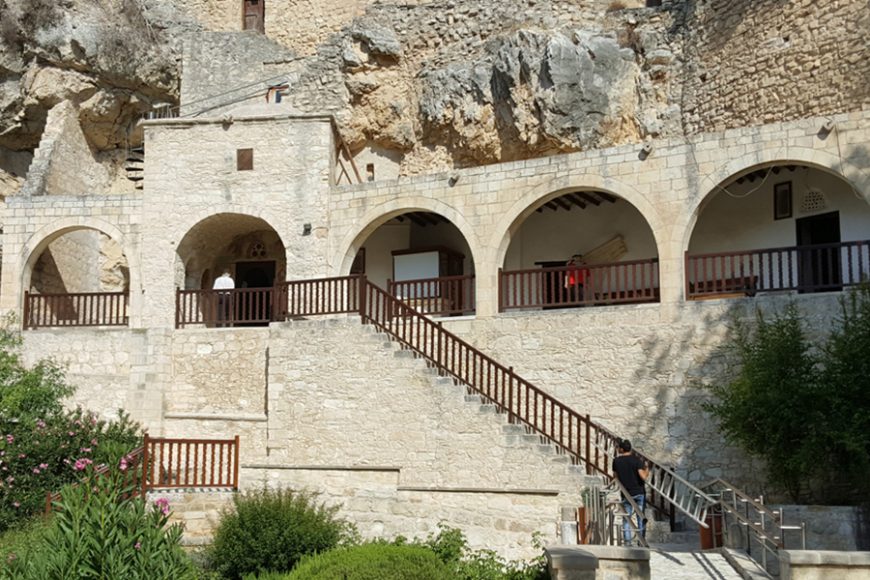
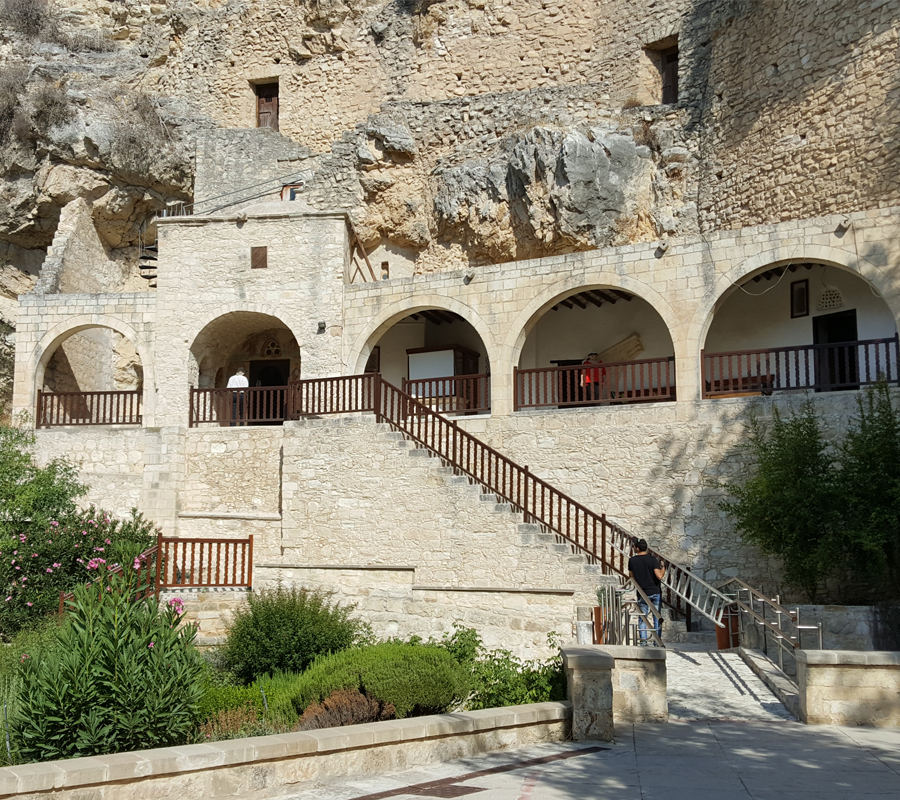
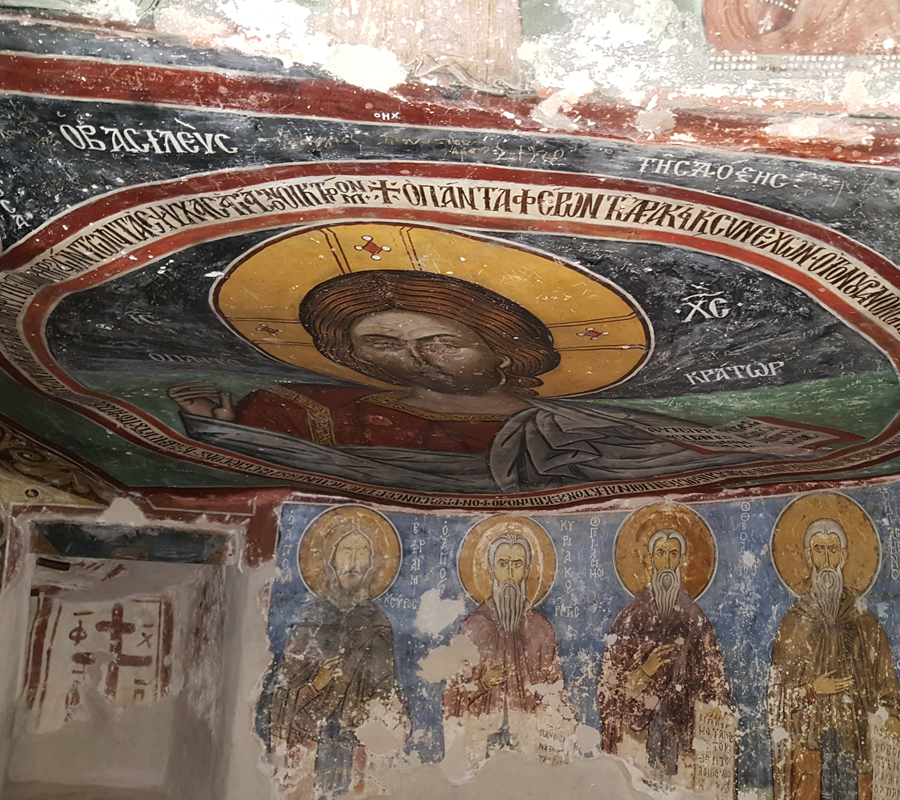
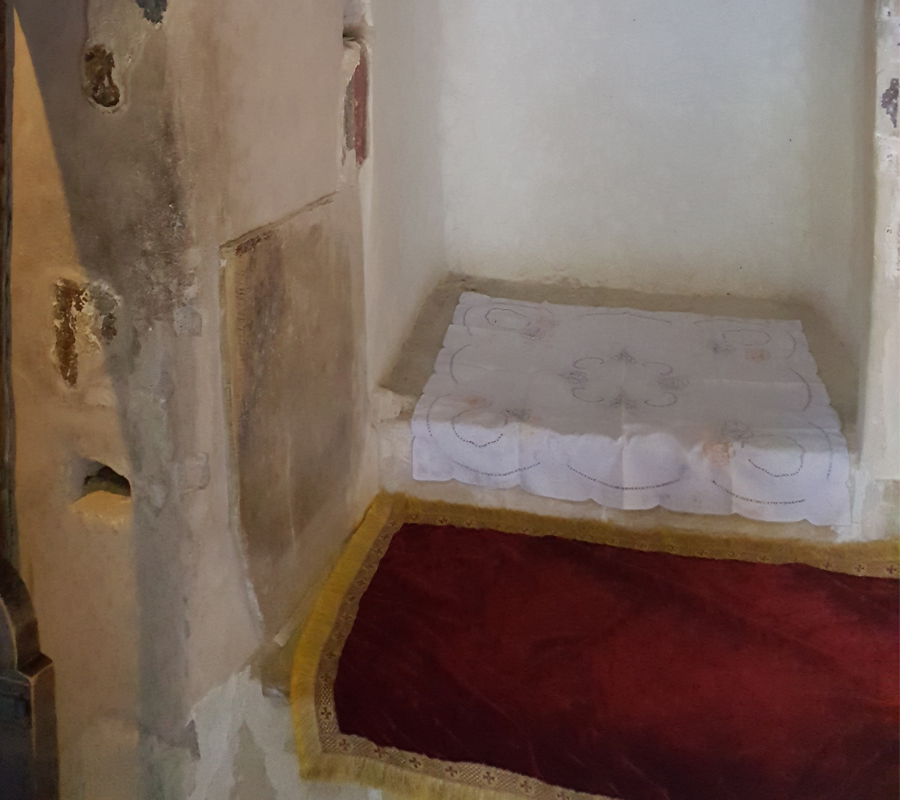
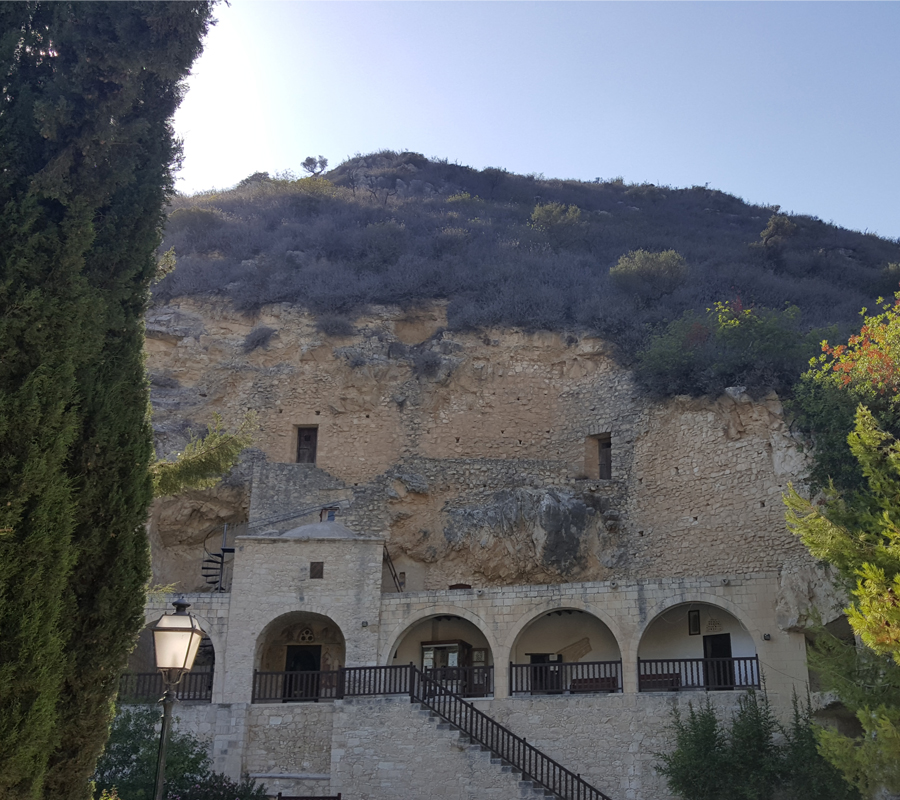
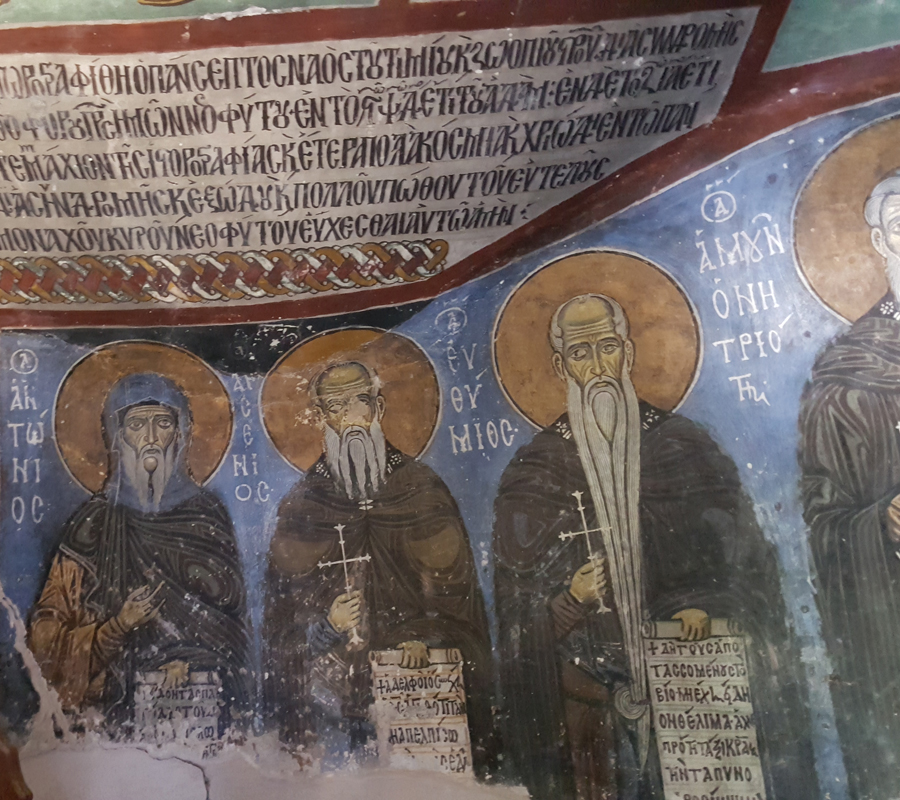
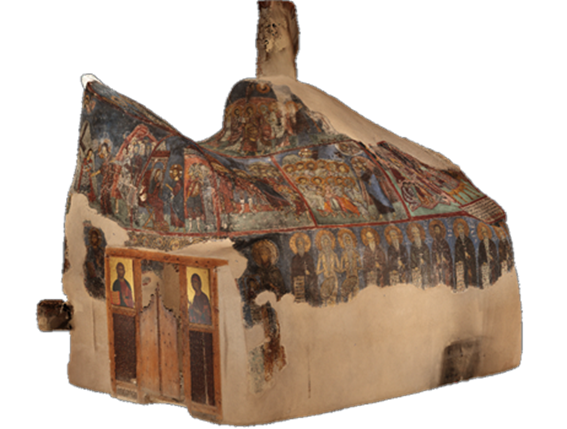
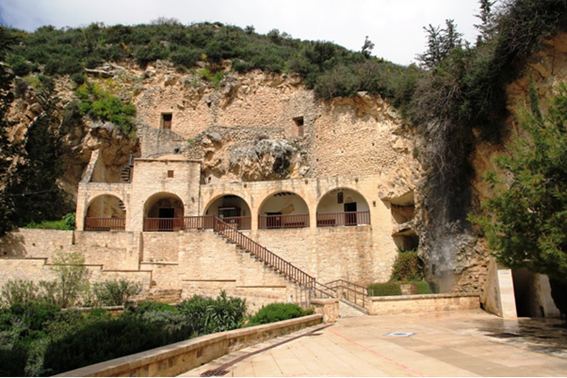
The Hermitage (enkleistra) of Saint Neophytos is one of the most celebrated Byzantine twelfth-century monuments worldwide, given the high quality and the unique iconographic program of its frescoes, encountered nowhere else in the Byzantine world, as well as the fact that the whole complex was cut in rock.
The monument is connected with an important intangible heritage. In fact, the community that was built and organised around Neophytos has been the centre of intellectual production with strong connections to the Byzantine elites of the island and the capital of the Byzantine empire (Constantinople), during the tumultuous period spanning the last decades of the Byzantine era -which ended with the conquest of the island by Richard the Lionheart in 1191- through the first decades of the Frankish period of Cyprus.
The intellectual production at the Enkleistra is evidenced by the writings of Neophytos and the composition of the pictorial narratives of the frescoes. The latter have been studied extensively in the past, whereas the writings of Neophytos, as well as the artefacts produced by or connected to the members of the circle of Neophytos –both monks and laymen– have made the object of far less studies.
Life of Saint Neophythos
Saint Neophytos the Recluse (1134-ca.1214) is one of the most important Cypriot Saints and historic figures. He was a prolific writer who composed his biography, an account of the first years of the Latin conquest of the island, as well as several theological treatises. At the age of 17 he became monk at Koutsoventis Monastery. In search of the solitary life, he quitted this Monastery two years later. After many adventures he decided to become an ascetic at the mountainous area above the city of Paphos. In 1159 he started building his cell, by enlarging and modifying an already existing cave, which was expanded into a complex comprising three caves: the Cell, the Bema and the Naos dedicated to the Holy Cross.
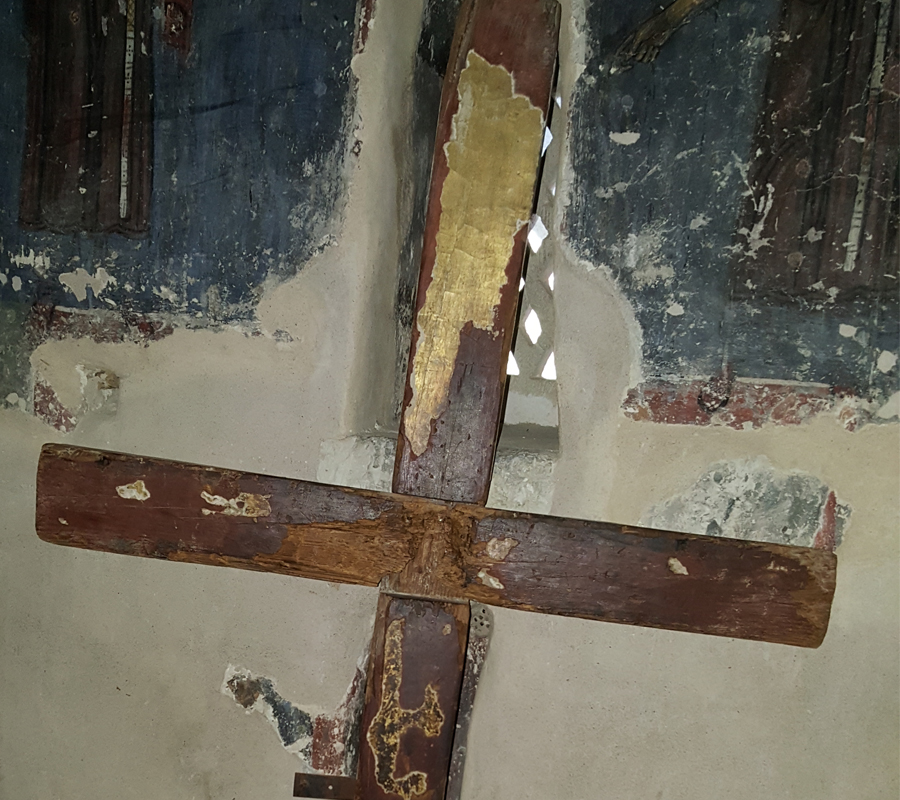
Neophytos soon became a well-known spiritual figure and in 1170 he was forced by Basil Kinnamos, the bishop of Paphos at the time, to accept a disciple. During this same period, the Enkleistra began to be extended and was adorned with paintings, while the whole cliff was excavated for the creation of additional cells. This extension phase included possibly as well the Refectory, which it was also adorned. According to Neophytos’ testimony, however, the Naos was excavated in 1183. The increasing number of pilgrims visiting him, obliged Neophytos to dig another cave above the first one (the so-called New Zion), in search of solitude and inner peace. This latter cave was completed and painted by the end of 1197. According to written testimonies, the Enkleistra was painted in 1183 by Theodoros Apseudis, likely a Constantinopolitan painter who came to Cyprus at the instigation of the bishop of Paphos Basil Kinnamos. To the same painter are also attributed the Bema and the Naos of the church of the Virgin at Lagoudera (UNESCO World Heritage monument in Cyprus, dated ca. 1192), as well as at least seven icons currently owned by different ecclesiastical institutions in Cyprus.
Mnemosyne’s research commitment
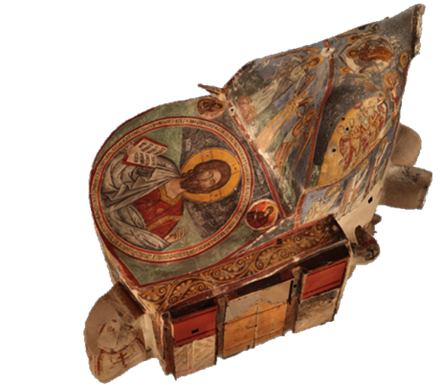
The Holy Monastery of Saint Neophytos has long been a partner of DHRLab, therefore, we have already digitally documented the Enkleistra of Saint Neophytos. However, the data acquisition didn’t move beyond the geometric (3D) documentation of it, as well as 2D photographs. More precisely, it included scanning by a terrestrial time-of-flight laser scanner for the exterior of the complex. The inside of the upper part of the Enkleistra was digitised through the acquisition of photos, sufficient for the creation of 3D models. The aforementioned data acquired in the context of past projects, in which DHRLab was involved have been made available to be used, exploited and further processed. Despite, however, the accuracy of the 3D documentation, the Enkleistra of Saint Neophytos has not been documented holistically since the history of the monument, its materials, the different phases in its lifecycle, as well as the personalities and therefore the intellectual and theological currents connected to it have been overlooked.
The documentation of the iconographic cycle of the frescoes necessitates further research in secondary sources (published material, documentaries, audio material) for tracing the intellectual contacts of Saint Neophytos. It also entails delving into his numerous works (already published), allowing thus a restitution, even a partial one, of the period between the late-twelfth- and the early-thirteenth-century intellectual environment prevailing at the Hermitage, which has undoubtedly defined the choices of Saint Neophytos, the person responsible as well for the iconographic cycle’s composition.
Gallery
Videos
Essential Bibliography
- Διεθνές Συνέδριο “Άγιος Νεόφυτος ο Έγκλειστος : Ιστορία-Θεολογία-Πολιτισμός”, Ιερά Βασιλική και Σταυροπηγιακή Μονή Αγίου Νεοφύτου, . (2010). Πρακτικά Α΄ Διεθνούς Συνεδρίου Άγιος Νεόφυτος ο Έγκλειστος. Πάφος: Ιερά Βασιλική και Σταυροπηγιακή Μονή Αγίου Νεοφύτου.
- Aristotelous, Charalambos. Saint Neophytos the Recluse and the Use of Holy Scripture in His Works: Comparative Documentation and Statistical Analysis Using Computational Processing. PhD diss., University of Nicosia, Department of Theology, 2023 https://repository.unic.ac.cy/archive/item/4386?lang=en
- Aristotelous, Charalambos. “Biblical Citations in the Writings of Saint Neophytos the Recluse.” Journal of Byzantine Studies. Nicosia, 2018. Conference paper.
- Aristotelous, Charalambos, ed. The Story of Neophytos the Recluse. Lefkara and Tala, Cyprus: Bilingual Exhibition Catalogue (Greek/English), 2016.
- Bakirtzis, Dimitrios. “The Hermitage Layout and Spatial Organization at the Enkleistra of Saint Neophytos.” In Proceedings of the 1st International Conference on Byzantine Monasticism. Thessaloniki: University of Thessaloniki Press, 2009.
- Bouras, Charalambos. “Iconographic Cycles in the Chapel of Saint Neophytos.” Byzantine and Modern Greek Studies 29 (2005): 211–234.
- Christodoulides, Charalambos G. Saint Neophytos Monastery: History and Art. Nicosia, 1989. (In Greek).
- Christodoulou, George. The Monastery of St. Neophytos and Byzantine Art in Cyprus. Nicosia, 1992.
- Christodoulou, George. The Monastery of St. Neophytos and Its Frescoes. Nicosia, 1992.
- Constantelos DJ. The Making of a Saint: The Life, Times and Sanctification of Neophytos the Recluse. By Catia Galatariotou. Cambridge, U.K.: Cambridge University Press, 1991. xvi + 310 pp. $64.50. Church History. 1994;63(3):440-441. doi:10.2307/3167549
- Georgiou, Stavros G. Nicholas Coureas, The Foundation Rules of Medieval Cypriot Monasteries: Makhairas and St Neophytos [Cyprus Research Centre, Texts and Studies in the History of Cyprus, XLVI], Nicosia 2003, σ. 182, in Βυζαντινά 29 (2009) (= Αφιέρωμα Στη Μνήμη Του Δημητρίου Γ. Τσάμη) 521-523 [in Greek].
- Demosthenous, Anthoulla A. “The Wings of the Saint.” Byzantine Studies Journal,. Nicosia, 2010.
- Demosthenous, Anthoulla A. Saint Neophytos the Recluse (1134–1214) and His World. Rhodes: University of the Aegean, 2005. (In Greek).
- Efthymiadis, Stephanos. “Cypriot Hagiography in the Hundred Years of Latin Rule.” In The Hagiography of Byzantine Cyprus: Saints, Hagiographers and Texts (Fourth to Thirteenth Century). Cambridge: Cambridge University Press, 2025.
- Galatariotou, Catia. The Making of a Saint: The Life, Times and Sanctification of Saint Neophytos the Recluse. Cambridge: Cambridge University Press, 1991.
- Glaros, Athanasios V. Saint Neophytos the Recluse and His Typikon. Athens: Irodotos, 2009. (In Greek).
- Hadjikyriakos, Andreas. “Pilgrimage and Memory at the Enkleistra of Saint Neophytos.” Greek Orthodox Theological Review 46 (2001): 301–323.
- Iliadou, Sophia. “Liturgy and Practice in the Typikon of Saint Neophytos.” Revue des études byzantines 67 (2019): 81–108.
- Ioannides, M. et al. (2016). Towards Monuments’ Holistic Digital Documentation: the Saint Neophytos Enkleistriotis Case Study. In: Ioannides, M., et al. Digital Heritage. Progress in Cultural Heritage: Documentation, Preservation, and Protection. EuroMed 2016. Lecture Notes in Computer Science(), vol 10058. Springer, Cham. https://doi.org/10.1007/978-3-319-48496-9_36
- Kakoulli, Ioanna. Conservation Studies of the Enkleistra Frescoes. Nicosia: Digital Heritage Research Lab, 2012.
- Kakoulli, Ioanna. “La technique des fresques de l’Enkleistra de Saint Néophyte.” Revue des études byzantines, 2012.
- Kakoulli, Ioanna, and Christian Fischer. “Byzantine Paintings in the Making: A Preliminary Technical Study of the Twelfth‑Century Wall Paintings in the Enkleistra of St. Neophytos.” In Enkleistriotika Analekta: Proceedings of the 1st International Conference St. Neophytos Enkleistros: History–Theology–Civilization, edited by Archimandrite Alexios Enkleistriotis, 437–461. Paphos: Ieras Vasilikis kai Stavropigiakis Monis Agiou Neophytou, 2011.
- Kakoulli, Ioanna, and Christian Fischer. The Techniques and Materials of the Wall Paintings at the Enkleistra of St. Neophytos (Phase II). Dumbarton Oaks Project Grant Report. Washington, DC: Dumbarton Oaks Research Library and Collection, Harvard University, 2012.
- Kapsalis, Theodoros. “Saint Neophytos’ Proverbs: Ascetic Teaching and Daily Life.” Byzantine Journal of Spirituality 12 (2016): 59–85.
- Lazaridis, Christos. Cypriot Monastic Manuscripts: A Catalogue. Nicosia: A. G. Leventis Foundation Press, 2011.
- Leventis Foundation, ed. The Typicon of Saint Neophytos the Recluse (1134–post 1214): Daily Life and Rules at the Enkleistra. Tala and Paphos: A. G. Leventis Foundation, 2024.
- Λυμπουρίδης Α., . (1988). Εξέχουσες μορφές της Κυπριακής ιστορίας. [Χ.τ.]: [χ.ό.].
- Mango, Cyril A., and Ernest J. W. Hawkins. “The Hermitage of St. Neophytos and Its Wall Paintings.” Dumbarton Oaks Papers 20 (1966): 119–206.
- Markides, Kyriakos. “Garden Symbolism in the Hermitage of Saint Neophytos.” Journal of Byzantine Art and Archaeology 15 (2018): 99–123.
- McAvoy, S., Charalambous, P., Voskeritchian, S., IOANNIDES, M., & Baker, D. (2025). Field Report: The Festival of Saint Neophytos Saint Neophytos Monastery, Near Tala, Cyprus September 26th-27th, 2025. Zenodo. https://doi.org/10.5281/zenodo.17403472
- Οικονόμου Χ. Κ., . (2010). Ο Άγιος Νεόφυτος ο Έγκλειστος. Πάφος: Ιερά Μονή Αγίου Νεοφύτου.
- Νεόφυτος ο. Έ., . (19962008). Συγγράμματα. Πάφος: Ιερά Βασιλική και Σταυροπηγιακή Mονή Αγίου Νεοφύτου.
- Oikonomou, Evangelos. “The Enkleistra in Medieval Travel Accounts.” In Byzantine Pilgrimage Literature. Oxford: Oxford University Press, 2020.
- Paschali M., Minasidis D., Seeing beyond seeing: Light and theophanic contemplation at the Enkleistra of Neophytos, Cyprus”, in Licht aus dem Osten? Natural Light in Medieval Churches between Byzantium and the West, A.I. Sullivan and V. Ivanovici (eds.), East Central and Eastern Europe in the Middle Ages, 450-1450, vol. 88. Leiden/Boston: Brill, 2022, pp. 128-150. https://doi.org/10.1163/9789004527980_007; https://brill.com/display/serial/ECEE?contents=toc-67486
- Papageorgiou, Athanasios. The Enkleistra of Saint Neophytos. Nicosia, 1969. (In Greek).
- Papageorgiou, Athanasios. The Painted Churches of Cyprus. Nicosia, 1985.
- Papazoglou, Eleni. The Typikon of Saint Neophytos the Recluse. Athens: Academy of Athens Press, 2012.
- Paraskeva, Katerina. “Women’s Devotion and the Hermit Saint in Medieval Cyprus.” Byzantine Studies Quarterly 7 (2017): 15–44.
- Paschali, Maria, and Dimitris Minasidis. “Seeing beyond Seeing: Light and Theophanic Contemplation at the Enkleistra of Neophytos, Cyprus.” In Natural Light in Medieval Churches, edited by Vladimir Ivanovici and Alice Isabella Sullivan, 128–150. East Central and Eastern Europe in the Middle Ages, 450–1450, vol. 88. Turnhout: Brepols, 2022.
- Radpour, Reza, et al. “THz Imaging Studies of Painted Samples to Guide Cultural Heritage Investigations at the Enkleistra of Saint Neophytos in Paphos, Cyprus.” In Terahertz Emitters, Receivers, and Applications V, Proc. SPIE 9102. Bellingham, WA: SPIE, 2014.
- Stathopoulos, Leonidas. Greek Manuscript Traditions in Cyprus. Athens: National Hellenic Research Foundation, 2010.
- Tryfonos, George & Ioannides, Marinos & Anastasi, A. & Apostolou, V. & Pieri, P. & Koundouris, M. & Savva, F. (2021). CULTURAL HERITAGE MONUMENT DOCUMENTATION THROUGH ADAPTIVE PARAMETRIC DESIGN PROCESS. The International Archives of the Photogrammetry, Remote Sensing and Spatial Information Sciences. XLVI-M-1-2021. 769-776. 10.5194/isprs-archives-XLVI-M-1-2021-769-2021.
- Tsiknopoullos, Ioannis P. Saint Neophytos the Recluse and His Monastery. Nicosia: Holy Monastery of St. Neophytos, 1973. (In Greek).
- Tsiamis, Nikos. “Architectural Developments at Saint Neophytos’ Enkleistra.” Byzantine Architecture Review 11 (2014): 145–174.
- Winfield, David C. “Reports on Work at Monagri, Lagoudera, and Hagios Neophytos, Cyprus, 1969–1970.” Dumbarton Oaks Papers 25 (1971): 259–268.
- The Hermitage of St. Neophytos, Cyprus. https://openheritage3d.org/project.php?id=D6HP4V