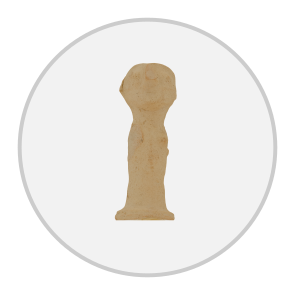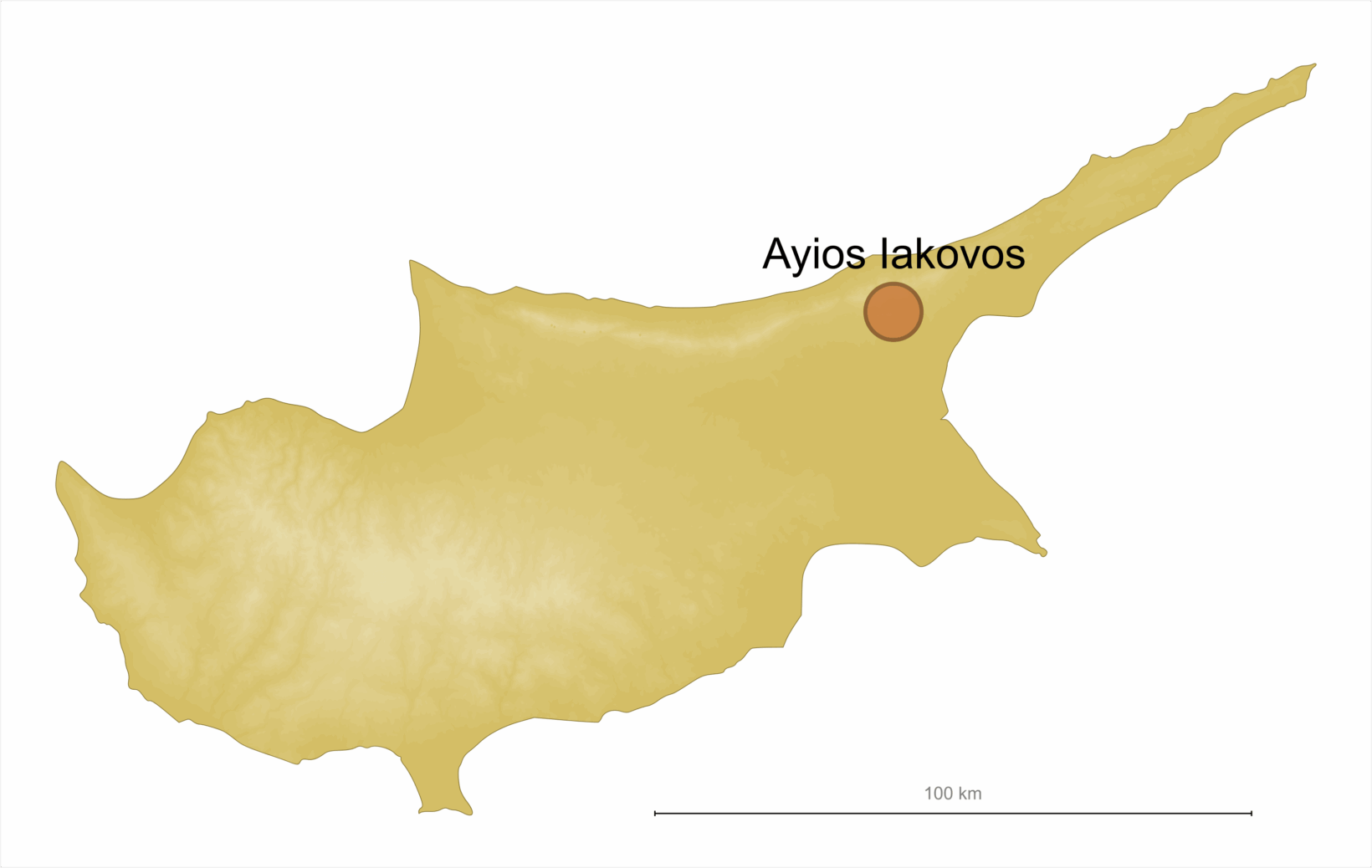
The village of Ayios Iakovos (also called Ajios Jakovos) is situated about 22.5 km north of Famagusta. In June 1929, the SCE began their operations in the necropolis of Melia and found two tombs entirely robbed by illicit diggings, but opened 14 new ones. Several of the tombs had more than one burial group. They are dated from Middle Cypriot III to Late Cypriot II (1725–1200 B.C.).
While excavating the necropolis the team searched for the settlement to which the tombs had once belonged. A villager drew their attention to a field not far from the northern outskirts of the village of Ayios Iakovos. Here his plough had turned up a lot of broken pottery which belonged to the same period as the latest burials of Melia. SCE dug a trial trench first, and then in August 1929 they carried out a proper excavation, but instead of a Bronze Age settlement they found a sanctuary. The sanctuary was in use in Middle Cypriot III and Late Cypriot II with an apparent gap in Late Cypriot I (1725–1600 B.C. and 1450–1200 B.C.).
Some 100 m north of the first sanctuary, another hill was investigated. The surface indicated a cult place of the Iron Age, and they found the foundations of a rectangular building 6.95 x 10.75 facing north and south. The sanctuary was clearly in use from the Late Cypriot I, as some layers contain only Bronze Age material, but the later periods of the building belong to the Iron Age, with finds as late as Cypro-Classical II or even Hellenistic times (1600–c. 310 B.C.). [Source: Translated from Marie-Louise Winbladh The sites of the Swedish Cyprus Expedition]