WEBINAR: Defining Paradata, Metadata & Data Part 2
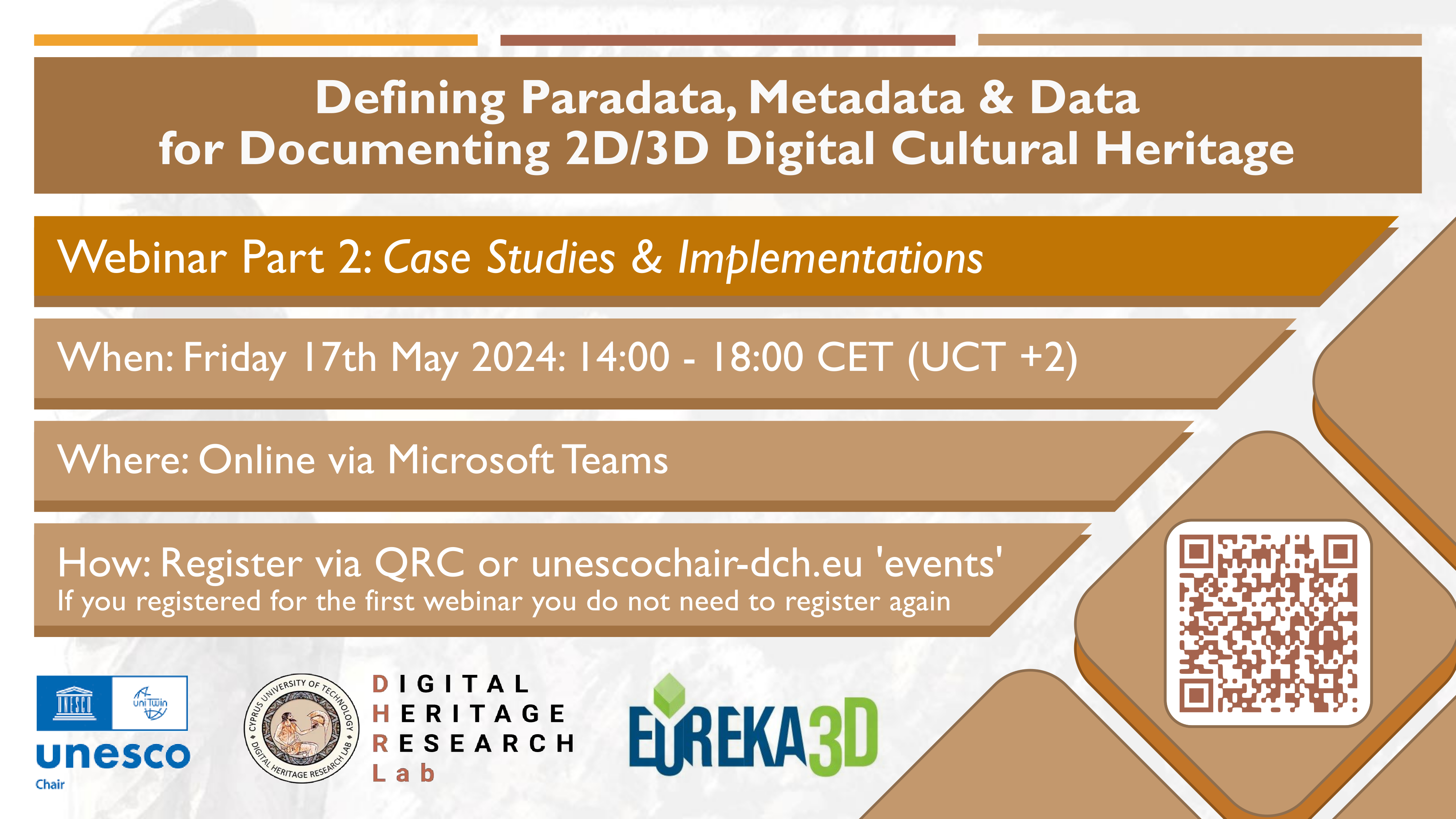
ON-LINE WORKSHOP Defining Paradata, Metadata & Data
for Documenting 2D/3D Digital Cultural Heritage Part 2
WHEN: 17th of May 2024; 14:00 -18:30 CET (UCT+2)
WHERE: Online via MS Teams invitation
HOW: Register online for this event by the 16th of May 2024*
WHAT: Download the latest agenda for the event HERE
* If you registered for Part 1 in April you do not need to reregister
The UNESCO Chair on Digital Cultural Heritage, in cooperation with the Earth Observation Research Lab (EOCult), the Mechanical Engineering Design & Additive Manufacturing Laboratory at the CY University of Technology, the EU CLARIAH-CY research infrastructure, the ARTEST and CREAMS projects, the CY-Eureka3D competence centre in Digital Heritage, the EU Project Digital Europe EUreka3D, as well as the Connecting-RPF and the EU HE Engineer are organising a unique Webinar dedicated to the topic of Paradata, Metadata and Data in the domain of 3D digital Documentation in Cultural Heritage.
Since its adoption in 2006 as part of the London Charter for the Use of 3D Visualisation in the Research and Communication of Cultural Heritage as a method for transparency in the creation of scholarly 3D Cultural Heritage assets, the adoption from ICOMOS of the Seville Charter in 2017 and the approval from the European Commission of the EU VIGIE2020/654 Study results on the quality in 3D digitisation of tangible cultural heritage, as a set of parameters for the estimation of the complexity in Data Acquisition of tangible objects, the concept of Paradata has appealed to many aspects of the digital documentation of the past; from expressing alternative interpretations, probability or confidence in visual-based heritage research to providing a basis for robust scholarly interrogation, and from describing workflows, data acquisition methods and parameters to supporting sustainability and high quality of data and its preservation approaches.
Now widely seen, along with Metadata and geometrical data, as part of the trinity that indicates high-quality 3D digital resources, both for enriching 3D assets, creating knowledge and promoting reusability, the Digital Cultural Heritage community still lacks a definitive description and differentiation of what Paradata and Metadata are, their benefits to stakeholders, owners, the multidisciplinary DCH community, digital scholarship, and compliance with the European Commission Recommendation for the collection of 3D-digitised cultural heritage assets.
This workshop will bring together professionals from the spectrum of Digital Cultural Heritage practice to share their experiences of using and working with Paradata seeking to lay down a common understanding of Paradata as a first step towards a community-built set of standards and expectations for its application to 3D documentation and the creation of knowledge.
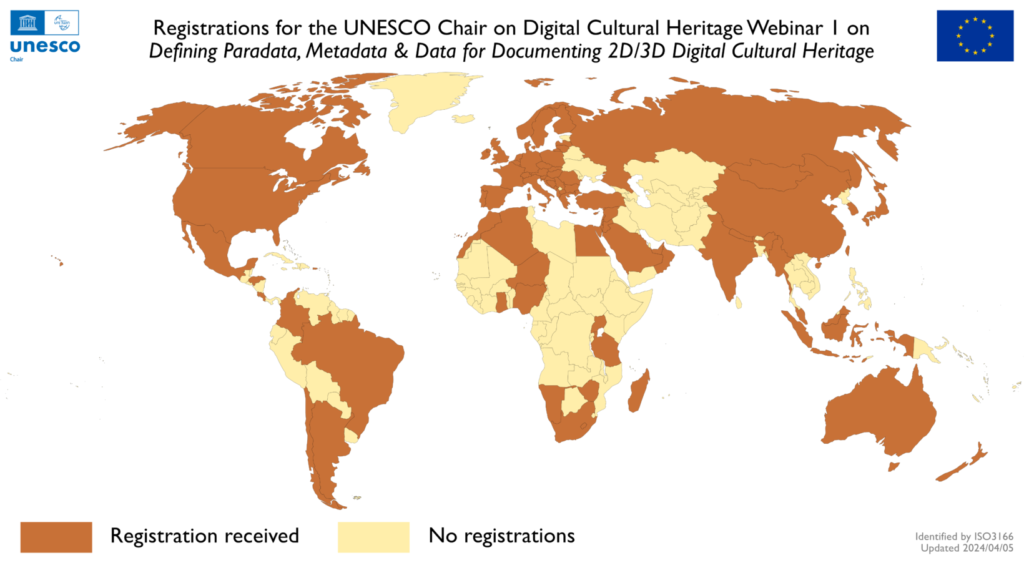
Who Is Participating?
Current registrations: 700 from around the world. Is your country represented?