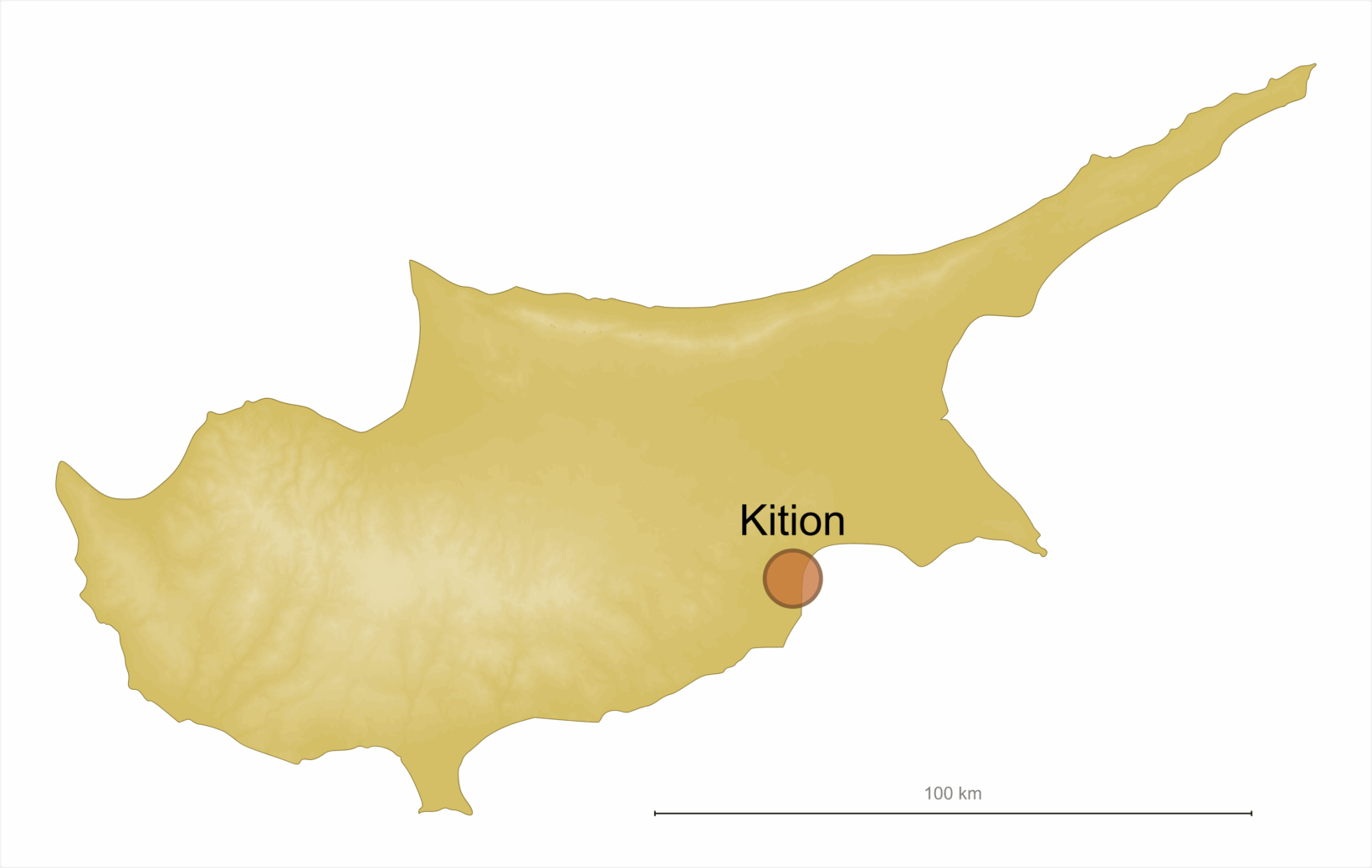
The ruins of Kition, the ancient capital of the Phoenician colony in Cyprus, are within the boundaries of the modern town of Larnaca on the south coast of the island. The ancient city was surrounded by city walls which are still visible.
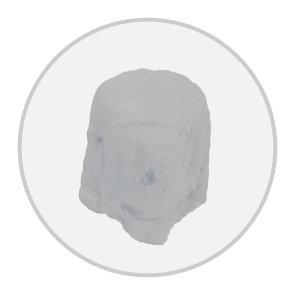
SCE began in October 1929 and continued until April 1930, with an interruption during the winter season. They wanted to do a stratigraphic examination of the Bamboula mound in order to be able to date the Phoenician colonisation of Cyprus and investigate the role of the Phoenicians in the development of the Cypriote culture. However, after three days of digging, they found a large deposit of sculptures and had to include a larger area for examination.
In Late Cypriot III and the beginning of Cypro-Geometric I (c. 1100–1000 B.C.), the acropolis of Kition began to be used as an open-air sanctuary. Until the Cypro-Archaic period, it consisted of a temenos, a sacred enclosure, with open votive and altar courts, and a roofed-in chapel placed in a corner of the votive court. In the Cypro-Classical I (480–400 B.C.) period, a new temenos was constructed on a larger scale and of more monumental design, with a solid wall of ashlar blocks. [Source: Translated from Marie-Louise Winbladh The sites of the Swedish Cyprus Expedition]